 Plants While Away
Watering Spikes vs. Wick Kits vs. Self-Watering Planters: Which Actually Works for Apartment Plants?
You have a trip coming up. Maybe five days, maybe two weeks. And you have eight or ten pots spread across a few windowsills. Some have drainage holes. Some are the cute ceramic ones that don’t. You want to come home to living plants, not crispy leaves or a pothos sitting in swamp.
That’s the real problem. Not which gadget is “best,” but which one fits your actual pots, your plant count, and your days away.
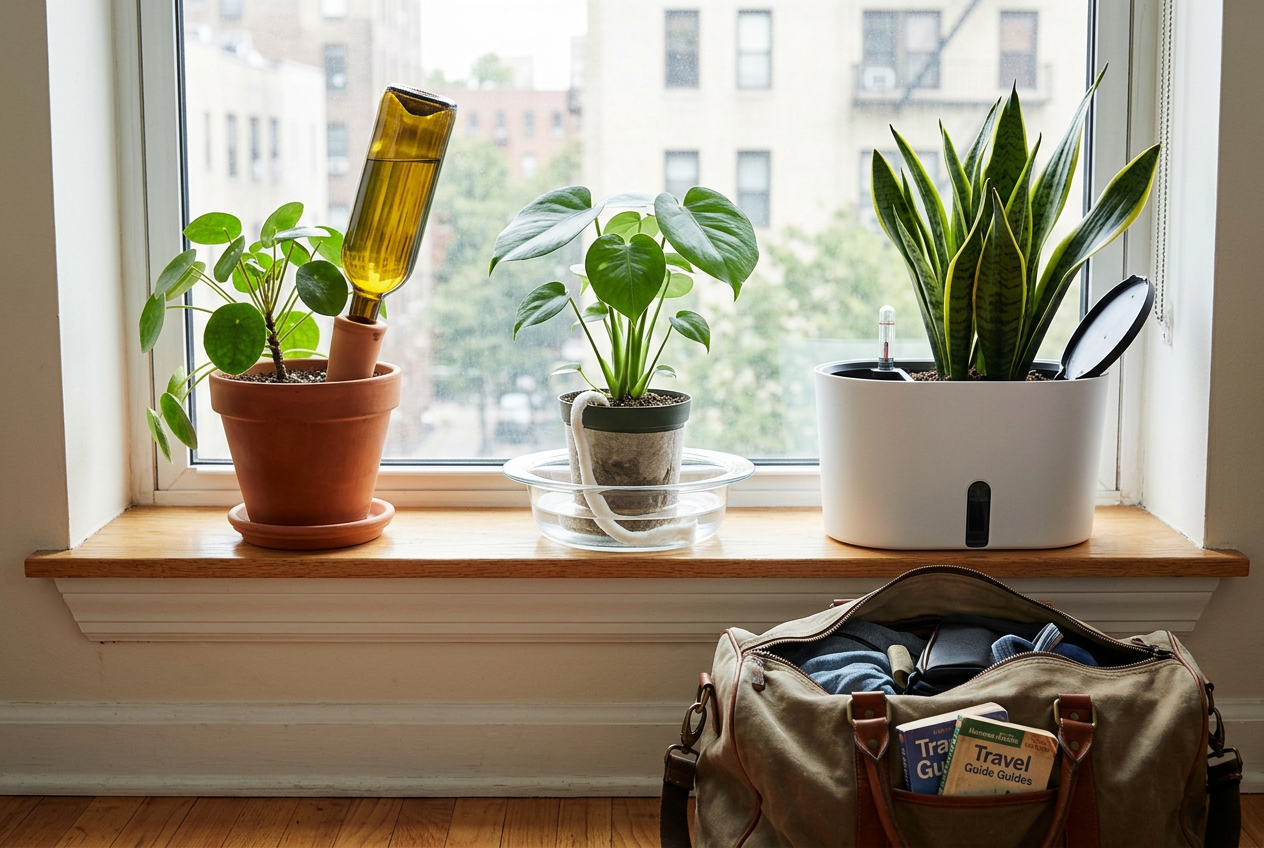
Three passive methods come up again and again: watering spikes you pair with a bottle, wick kits you run from a water jug, and self-watering planters with a built-in reservoir. All three move water without electricity. They rely on gravity, on dry soil pulling moisture through porous clay, or on capillary action drawing water up a cord.
They also fail in two predictable ways. On long trips, the reservoir runs dry and the plant goes thirsty. In pots without drainage, water keeps arriving and the soil stays soggy. Some plant owners report root problems when soil never gets a chance to dry out.
This guide walks through how each method works, what it costs you in setup effort and counter space, and which pot types it suits. It also covers when a powered drip kit or a plant sitter makes more sense. There is no single winner here. The ending is a scenario-by-scenario match, so you can pick before you book.
- How many pots you need to cover: Spikes and wick cord scale by buying more pieces or cutting more length, while self-watering planters scale one plant at a time. Count the pots that genuinely need help before you buy.
- Pot material and drainage: Terracotta pots dry faster than plastic or glazed ceramic, and a pot with no drainage hole has nowhere to send extra water. Fix drainage first, since soggy soil is the most common failure with passive watering.
- How thirsty your plants are: Moisture lovers like ferns, pothos, and calathea benefit most. Succulents, cacti, snake plants, and ZZ plants usually do fine with one good soak and no device at all.
- Days away versus reservoir size: Nothing refills itself, so the bottle, jar, or built-in chamber sets the real limit. Run the setup at home for several days and track the water line instead of trusting a claimed day count.
Spikes, wicks, and self-watering planters all move water without electricity, but they fit very different pots, plant counts, and trip lengths. Here is how each option works in an apartment, what it costs you in setup effort and counter space, and which scenario it actually suits.

20 Pack Terracotta Plant Watering Spikes, Self-Watering Stakes for Wine Bottles, Porous Clay, Reusable (Red A)
The simplest way to cover a lot of mid-size pots at once: porous clay spikes paired with bottles you already own, with spares in the pack for the ones that crack.

SmartiLiving Ollas (Set of 4) | 12oz Terracotta Plant Watering Globes - Self Watering Planter Insert - Automatic Plant Watering Devices | Vacation Watering Pots for Indoor & Outdoor Plants
Buried clay reservoirs that skip the bottle-on-top clutter and sit low in the pot, so they are harder to knock over on a narrow sill.

8 Pc Olla Watering Spikes With Lids, Self Watering Spikes For Indoor Plants
A larger set with covered tops, which cuts surface evaporation and keeps dust and leaf debris out of the reservoir, and gives you enough units to double up in wide pots.
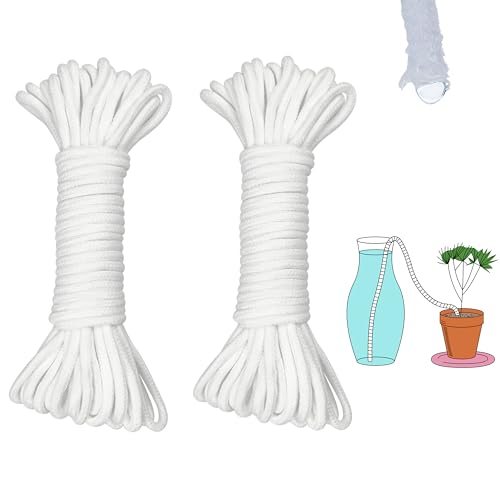
ORIMERC 60 feet 1/5 inch Self Watering Capillary Wick Cord Vacation Plant Sitter DIY Hydroponic Wicking Self-Watering Planter Pot Automatic Water System Device Potted Violet Auto Seedling Waterer Rope
The most adaptable option for mismatched pots: cut the cord to length, run one wick to a small pot or several to a big one, and feed them all from a container you choose.

Fielda 8/10/12 Inch Self Watering Pots for Indoor/Outdoor Plants
A longer-term fix for one or two moisture lovers you can repot weeks ahead, with sizes that match the pots most apartment growers already use.

Automatic Plant Waterer Indoor Self Watering System for 15 Potted Plants, Auto Drip Irrigation Kit Programmable Water Timer with Smart Humidity Detection, Green
The step up when passive reservoirs run out: one large container you supply, tubing to each pot, and a schedule you set rather than a bottle you hope lasts.
In this guide
How Each Method Works, and How They Compare Side by Side
All three methods do the same basic job. They move water from a holding container into your soil while you are gone. The difference is how the water moves, and what that means for your pots.
Porous clay: spikes and olla inserts
Terracotta is a fired clay that water can pass through slowly. Clay spikes and olla inserts absorb water and let it seep toward drier soil around them. Spikes usually attach to a bottle you supply, like a wine or soda bottle. Ollas are small buried vessels you fill and cover. Nothing pumps. Nothing plugs in.
Plastic bottle spikes and glass globes
Plastic spikes and glass globes work differently. Water leaves through an opening rather than through the clay wall itself. Flow depends on how tightly the soil packs around that opening. Looser mixes can drain faster than you expect.
Wick cords
A wick cord sits with one end in a water container outside the pot and the other end buried in the soil. Water travels up the cord by capillary action, the same way a paper towel pulls up a spill. You choose the container, so you control how much water is in reserve.
Self-watering planters
A self-watering planter holds water in a chamber under the soil. Water reaches roots through a wick or a column of soil that touches the reservoir. The trade-off is simple: your plant has to live in that pot. That means repotting before you travel.
Why nobody can promise a day count
Be careful with any claim that a device lasts a set number of days. Draw rate changes with room temperature, light, pot volume, soil density, and how thirsty the plant is. A dense peat mix in a warm, bright room behaves nothing like a chunky mix in a cool hallway. Published duration figures rarely say what conditions they assume.
There is a second risk worth knowing. Plant community reports raise concerns that spikes can keep soil wet so long that roots never get to dry out, which can lead to root rot. Drainage holes matter here. So does testing your setup at home for several days before you actually leave, while you can still watch what happens.
Cheapest Way to Cover a Lot of Pots: Terracotta Spikes You Pair With Bottles
If you have eight or ten mid-size pots, cost per plant starts to matter. Buying a self-watering planter for every plant gets expensive fast. Terracotta spikes that take a bottle you already own are the cheapest way to cover a lot of pots at once.
The idea is simple. The spike is unglazed clay with tiny pores. You push it into damp soil, then invert a filled bottle into the top. Water seeps through the clay into the soil as the soil dries. Terracotta spikes absorb water rather than just dripping it out, which is part of why many growers prefer clay over plastic versions.
20 Pack Terracotta Plant Watering Spikes, Self-Watering Stakes for Wine Bottles, Porous Clay, Reusable (Red A)
Check Price on AmazonThis 20 pack of porous clay spikes is sized for standard wine bottles, and the spikes are reusable season after season. Twenty gives you spares, which matters because clay can crack if you force it into dry, packed soil.
Who this setup suits
This works best if a few things are true for you:
- You already have empty wine or soda bottles, so your only cost is the spikes.
- Your pots are at least a few inches wide, with room for the spike away from the main root ball.
- Your pots have drainage holes, so any extra water can escape instead of sitting around the roots.
- You are planning a short-to-mid-length trip, not a month away.
One gardener who used watering spikes while traveling wrote that the system probably works better for indoor potted plants and trips of about a week.
The real downsides
Your reservoir is capped by the bottle. A wine bottle holds what a wine bottle holds. You cannot stretch that across two weeks for a thirsty plant in a small pot.
Bottles also stick up out of the pot. That looks cluttered, and on a narrow windowsill a tall bottle is a tipping risk. A spilled bottle means a soaked floor and a dry plant. Move those pots off the sill and onto a tray on the floor before you leave.
There is a plant health risk too. Some growers report that spikes can keep soil wet without letting it dry out between waterings, which can stress roots. Plants that like to dry out, like cacti and snake plants, are poor matches. Ferns and other moisture lovers do better.
Pre-soak, then do a dry run
Do two things before your trip.
First, soak the clay spikes in water for a while so the pores fill. Dry clay pulls water fast at first, which can empty a bottle quicker than you expect.
Second, run a practice setup at home while you are still there. Set everything up, note the water line on each bottle, and check it daily for three or four days. You will see which plants drain their bottle fast, which barely use any, and whether any spike has stopped flowing. That is information you cannot get from a label, and it is the only way to know if this method covers your actual trip length.
No Bottles, No Clutter: Terracotta Olla Inserts
Bottle-fed spikes work, but they look messy. You end up with a wine bottle sticking out of every pot. Those bottles are also top heavy. A cat or a bumped table can tip one over.
Olla inserts solve the clutter problem. An olla is a small unglazed clay vessel that you bury in the soil and fill with water. The clay is porous, so water seeps out slowly into the soil around it. There is no bottle on top. The whole thing sits low in the pot, so it is harder to knock over.
SmartiLiving Ollas (Set of 4) | 12oz Terracotta Plant Watering Globes - Self Watering Planter Insert - Automatic Plant Watering Devices | Vacation Watering Pots for Indoor & Outdoor Plants
Check Price on AmazonThis set gives you four 12 ounce terracotta olla inserts, which is enough for four small to medium pots. Terracotta works differently from plastic spikes. Plastic spikes rely on a hole and gravity to drip. Terracotta absorbs the water first, then passes it through the clay wall as the surrounding soil dries. That tends to be gentler than a steady drip, which matters because soil that never gets a chance to dry out is the main way passive systems cause root rot.
The limit you have to plan around
Twelve ounces is about a cup and a half. That is the whole supply. Once the reservoir is empty, nothing refills it. No olla, spike, or wick adds water that you did not put there before you left.
So treat these as a tool for small pots and shorter trips. They are a poor match for a large floor pot with a thirsty plant, or for a two week trip. For those situations you need a bigger reservoir, a plant sitter, or both.
How to estimate if 12 ounces is plausible for your pot
Do not guess. Run a test before you book anything.
- Water the plant normally. Note how much water you usually give it and how many days pass before the soil feels dry an inch down.
- Bury one olla in that pot, fill it, and mark the date.
- Check it every day. Write down the day it runs dry.
That number is your real starting point. If an olla empties in three days at home, it will not stretch to seven while you are gone.
A few things speed up the draw. Warm rooms, dry winter air from heating, bright direct light, small pots, fast draining mixes, and terracotta pots all pull water faster. Cooler rooms, lower light, bigger pots, and plastic or glazed pots slow it down. If you plan to leave the thermostat higher or the blinds open, test under those same conditions.
One more check. Make sure the pot still drains. Passive watering plus a pot with no drainage hole is how soil stays soggy for days. If a pot has no hole, repot it or use a different method.
Olla Spikes With Lids for Dust and Evaporation Control
If you grow more than a handful of plants, a four-pack runs out fast. One pot often needs two spikes. That is where a larger set helps.
This set includes eight olla spikes, and each one comes with a lid.
What the lids actually do
An olla spike is a small clay reservoir you bury in the soil. You fill the top with water. The clay absorbs the water and releases it slowly into the soil around it. That is the same basic idea behind all terracotta watering spikes.
The open top is the weak spot. Two things happen there:
- Water sits exposed to the air and evaporates from the surface instead of moving into the soil.
- Dust, soil bits, and leaf debris fall in.
A lid covers that opening. Less surface evaporation means more of the water you poured in goes where you want it. Less debris in the reservoir means less gunk settling at the bottom. That matters more over several days than it does overnight.
Lids also help if you have a cat or a curious toddler. A covered reservoir is harder to tip, dip into, or knock full of litter.
The same ceiling applies
Lids do not change the main limit of any self-contained clay device. The reservoir is small. It holds what it holds. When it is empty, it stops working, and nobody is home to refill it.
So plan around that:
- Short trips first. These are best for a weekend or a few days, not two weeks.
- More units in big pots. A wide pot needs several spikes spaced around the root zone, not one in the middle. Having eight gives you room to double up.
- Expect different drain rates. How fast clay releases water depends on your soil mix, pot material, room temperature, and how dry the soil already is. A chunky, fast-draining mix pulls water differently than a dense peat mix. Nobody can give you an exact day count for your apartment.
Test before you leave
Do a dry run at home. Set the spikes the way you plan to, fill them, and check them each day for three or four days. Note how long they stay full and whether the soil nearby feels damp or soggy.
If the soil stays wet all the time, that is a warning sign. Constantly saturated soil raises the risk of root rot, which is the common failure with passive watering. Pull a spike or use fewer per pot.
Also confirm your pots drain. Clay spikes keep adding water, so a pot with no drainage hole has nowhere to send the extra. Repot into a pot with a hole, or pick a different method for that plant.
For longer trips, or for large or high-value plants, line up a friend to stop by instead.
Wick Kits: The Flexible DIY Option for Odd Pot Sizes
A wick kit is the most flexible of the three methods. You get a roll of cord. You cut it to whatever length you need. One end sits in a water container. The other end goes into the soil. Water travels along the cord by capillary action, the same way a paper towel pulls up a spill.
That flexibility matters if your plants are a mix of sizes. A 4-inch pot and a 10-inch pot need different amounts of water. With cord, you can run one wick to the small pot and two or three to the big one. You can also run several wicks from one large reservoir to several pots sitting close together. No method here adapts as easily.
ORIMERC 60 feet 1/5 inch Self Watering Capillary Wick Cord Vacation Plant Sitter DIY Hydroponic Wicking Self-Watering Planter Pot Automatic Water System Device Potted Violet Auto Seedling Waterer Rope
Check Price on AmazonThe ORIMERC wick cord comes as a 60 foot roll of 1/5 inch cord, which is enough length to cover a lot of pots and still leave slack for a second try if your first setup does not flow well.
What You Have to Supply Yourself
The cord is the only part you get. You provide the water container. A glass jar, a pitcher, a plastic tub, or a small bucket all work. Size it to your plant count and trip length. More pots and more days mean more water.
Height matters. Place the reservoir at the same level as the pot or a little above it. Wicks move water best when they are not fighting a long uphill pull. A shelf, a stack of books, or an upturned bowl can raise the container.
Leak and Spill Points to Check
Wicks do not have valves or seals, so the risk is not a burst line. It is slow mess. Check these spots before you leave:
- The cord outside the pot. Water can creep along the cord and drip at the lowest point. Put a saucer or towel under that spot.
- An open reservoir. A jar with no lid can get knocked over. Push it against a wall or use a wide, heavy container.
- The pot saucer. If water keeps arriving and the pot drains well, the saucer can overflow. Empty it before you go and use a deep one.
- Floors and furniture. Set the whole setup on a tray or over tile if you can.
Why Wicks Need the Most Testing
Flow depends on how deep the cord sits in the soil, how high the reservoir is, how wet the soil already is, and how dry your apartment air gets. Those variables change the result, and there is no published flow rate you can look up for your exact setup.
So test it. Set everything up a full week before your trip. Mark the water line on the reservoir with tape. Check the mark and the soil each day. Too little flow means adding a cord or raising the jar. Soggy soil means pulling a cord out or lowering the jar. Then leave it in place until you go.
Self-Watering Planters: Best for Plants You Can Repot Before the Trip
A self-watering planter holds water in a built-in reservoir under the soil. The soil pulls water up as it dries. You fill the reservoir, and the plant draws what it needs.
That sounds like the easy answer. But it works differently from spikes and wicks in one big way. You have to repot the plant to use it. That makes this a change to your normal routine, not something you add the week before a trip.
Why you repot early, not the night before
Repotting disturbs roots. A plant may droop or drop a leaf or two while it settles in. You want to be home to watch that happen, not on a plane.
Give yourself a few weeks between repotting and your departure date. That gives the plant time to recover and gives you time to learn how fast the reservoir empties in your apartment. Fill it, mark the date, and check the water level every few days. If you find out the reservoir runs dry in four days, you know a ten day trip needs a different plan or a plant sitter.
A set that covers common pot sizes
If you want to try this method, look for a set that matches the pot sizes you already use. This one comes in 8, 10, and 12 inch sizes and is listed for indoor or outdoor plants.
Matching sizes matters more than it sounds. A plant that has outgrown a 6 inch pot will be happier moving up to the next size, while a small plant dropped into a 12 inch pot sits in a lot of damp soil it cannot use. Repot into the size that fits the root ball with a little room to grow.
The real drawback: wetter soil than some plants want
This is the most common complaint about self-watering planters, and it is fair. A bottom reservoir can keep the lower soil damp much of the time. Some plants love that. Others rot.
Good matches are plants that like steady moisture and wilt fast when they dry out. Pothos, peace lily, ferns, and calathea are the kinds of plants that tend to do well with constant access to water.
Poor matches are plants that need their soil to dry out between drinks. Cacti, succulents, snake plants, and ZZ plants fall in this group. These plants are already built to handle a week or two alone. Leave them in their regular pots, water them well before you go, and skip the gadget entirely.
Who this method is for
Choose self-watering planters if you travel a few times a year, you grow moisture-loving plants, and you are willing to repot once for year-round benefit. Skip them if your trip is next week, if your plants are drought tolerant, or if you do not want to disturb roots right now. Spikes or wicks are the lower-commitment choice in those cases.
When Passive Methods Aren’t Enough: A Programmable Drip Kit
Clay spikes, olla inserts, and wick kits all share one limit. The water they can move is capped by the size of the bottle or jar feeding them. Add more pots and you add more small reservoirs to fill, check, and hide. At some point the math stops working. If you grow ten or more plants, or you are gone longer than a week, a powered drip system is the next step up.
These kits use a small pump, a timer, and thin tubing that splits out to each pot. You set a schedule. The pump pulls water from one large container you supply, like a bucket or a storage bin, and pushes it through the tubing to a drip end in each pot. One reservoir, many plants.
Automatic Plant Waterer Indoor Self Watering System for 15 Potted Plants, Auto Drip Irrigation Kit Programmable Water Timer with Smart Humidity Detection, Green
Check Price on AmazonThis kit is rated by its maker for up to 15 potted plants and includes a programmable timer plus humidity detection. Treat the plant count as a maximum, not a promise. How long your water lasts depends on the container you pick, how many drip ends you run, your soil mix, and how warm and bright the room is while you are gone. Manufacturer coverage numbers rarely tell you the conditions behind them, so plan to measure your own.
The failure modes to plan for
A powered system has more parts than a clay spike, so it has more ways to quit.
- Battery or power loss. If the unit runs on batteries, fresh ones before you leave are not optional. If it plugs in, use an outlet that is not on a switch someone might flip.
- Clogged drip ends. Fine soil, mineral buildup, or debris in your water container can block an emitter. One blocked line means one dry plant while the rest get watered.
- Kinked or popped tubing. Thin tubing holds a bend. A kink stops flow. A loose connection sprays water on your floor instead of into soil.
- A reservoir that empties early. If the schedule runs longer or more often than you estimated, the pump can run dry days before you get home.
Run the whole program at home first
Set the kit up at least several days before your trip and let the full schedule run while you are there to watch. You want to see every cycle fire, every pot get wet, and every line stay put. Mark the water level in your reservoir and check it daily. That tells you your real drain rate, not a guess.
Put the reservoir and the pots on a surface you can afford to get wet, or set a tray under each one. Renters have a real reason to care here. A leak you catch on day two at home is a nuisance. The same leak on day two of your trip is a floor problem.
If the test run shows the reservoir draining too fast, use a bigger container, cut the watering time per cycle, or drop a few pots from the system and give those a clay spike instead. For a large collection or expensive plants on a long trip, still line up a friend to stop by once.
How to Choose: Match the Method to Your Pots, Plant Count, and Days Away
Four questions settle this. Answer them in order.
1. How many plants?
Count the pots you actually need to cover. A few small plants are easy. Fifteen pots spread across three rooms is a different job. Spikes and wicks scale by buying more pieces, like a 20 pack of terracotta spikes or a long roll of wick cord you cut to length. Self-watering planters scale one pot at a time, since each plant needs its own.
2. What are your pots made of, and do they drain?
Terracotta pots dry out faster than plastic or glazed ceramic, because the clay breathes. Drainage holes matter even more. A pot with no hole can collect water at the bottom, and a passive system that keeps adding water makes that worse. Overwatering is the most common way these setups fail. If a pot has no drainage hole, fix that before you add any watering device.
3. Which species, and how thirsty are they?
Snake plants, ZZ plants, and most succulents handle dry soil well. Many can simply be watered before you go. Ferns, calatheas, and other moisture lovers are the ones that need help. Sort your plants into thirsty and tough. You may only need a system for three or four pots.
4. How many days will you be gone?
Be honest about travel days on both ends. And know the limit here: no passive system can be promised to last a set number of days. Water use depends on your soil mix, pot size and material, room temperature, light, and how dry your apartment air is. Anyone quoting an exact day count is guessing about your home.
Common apartment scenarios
- Weekend away, mixed collection: Water everything well, move pots off hot windowsills, and skip the gadgets.
- About a week, several drainable pots: Terracotta spikes with bottles, or buried olla inserts if you dislike bottles on display.
- Odd pot sizes or shallow pots: Wick cord into a shared jug of water.
- One or two fussy plants you can repot first: A self-watering pot set up weeks ahead.
- Long trip or a big collection: A plant sitter, with a passive system as backup.
Do these three things either way
Group your thirsty plants together, away from heating vents and bright hot windows. Less light and heat means slower water loss. Indirect light for a week will not hurt most houseplants.
Then do a trial run. Set the system up exactly as you plan to leave it, at least a week before you go. Check the soil daily. You are looking for soggy soil, leaks, a reservoir that empties too fast, or a spike that stopped flowing.
Finally, arrange a sitter for anything you would be upset to lose. A person who can check in once can catch a failure no device will report.
Common Questions About Spikes, Wicks, and Self-Watering Pots
Do watering spikes cause root rot?
They can, if the soil never gets a chance to dry. Plant owners in houseplant forums report that spikes keep soil wet and can hurt root health over time. That matches a basic rule of houseplant care: most roots need air as well as water. Spikes are safest in pots with drainage holes, in a soil mix that drains well, and for plants that like steady moisture. Overwatering is the main risk with every passive system here, so treat it as a real trade-off, not a rare fluke.
Can I use these in pots with no drainage holes?
Skip them. A pot with no hole has nowhere for extra water to go. A passive system keeps adding water, so the bottom of the pot can stay soaked. If you have a favorite cachepot with no hole, put a nursery pot inside it and run the spike or wick in the inner pot. Then empty the outer pot before you leave.
Terracotta or plastic spikes?
The two work differently. Terracotta is porous, so water moves through the clay wall. Plastic spikes usually release water through an opening instead. Independent duration data is thin for both, and release speed shifts with your soil, pot size, and room conditions. Terracotta is the common pick for indoor pots because it pairs with bottles you already own. See the sections on bottle-fed terracotta spikes and buried olla inserts for how each setup looks in practice.
How many spikes does a large pot need?
One spike wets the soil near it, not the whole pot. For a wide pot, plan on two or more, spaced around the root zone and a couple inches from the stem. Buying spikes in a multi-pack makes that easier. If dust or evaporation in the open reservoir bothers you, olla spikes with lids cover the top.
What about succulents and cacti?
Passive watering and succulents are a poor match. These plants are built for dry spells and usually do fine for a week or more with a good soak before you go. Water them well, move them out of hot direct sun, and leave them alone.
Do I still need a sitter for a three-week trip?
Often yes. Reservoir size, not good intentions, sets the limit. One reader account of spikes suggests they suit indoor pots for about a week. For three weeks, your realistic options are a sitter, a programmable drip kit with a large reservoir, or repotting thirsty plants into self-watering planters weeks ahead. For odd pot sizes, a wick cord run to a jug can stretch coverage.
Whatever you pick, set it up a week before your trip and watch what happens. That test tells you more than any claimed day count.
Your Next Step Before You Book
Here is the short version.
If you have a lot of pots and a trip of about a week, terracotta spikes you pair with bottles are the simplest way to cover many plants at once. They need no power and no plumbing. If you do not want bottles on your shelves, terracotta olla inserts sit in the soil instead.
If your pots are all different sizes and shapes, wick cord bends to fit. You cut the length you need and run it from a water container to each pot. That flexibility is the main reason to pick it.
If you have one or two moisture loving plants that always dry out too fast, a self watering planter is a longer term fix. You do have to repot, so do that weeks before you leave, not the night before.
If you have a large collection or you will be gone longer than a passive method can cover, a programmable drip kit is the better match. It also brings more parts that can fail, so it needs more checking.
Run a dry run at home
Whatever you pick, set it up now and let it run for several days while you are still home. This is the one step most people skip, and it is the step that catches problems.
Watch for these things:
- Clogs. Clay spikes and drip emitters can slow down or stop. If a reservoir has not dropped at all after a day, something is blocked.
- Leaks. Check the floor, the windowsill, and the spot where tubing or cord meets the container. A slow drip is easy to miss until it soaks a rug.
- Soggy soil. Press a finger into the top inch of soil each day. If it stays wet and muddy, the system is giving too much water. Houseplant growers often point to constant moisture as a root rot risk, so soil that never dries at all is a warning sign, not a success.
- Too little water. If the soil dries out and leaves droop, you need a bigger reservoir, more spikes per pot, or a different method.
- Drainage. Make sure every pot can still let extra water out. A pot sitting in a saucer full of standing water is a problem no watering system can fix.
Also write down how much the reservoir drops each day. That number tells you how many days your setup can actually cover in your apartment, with your light and your temperature. Manufacturer duration claims are made under conditions you cannot confirm, so your own count is more useful.
If the dry run shows your plants need more than your setup can give, ask a friend or neighbor to stop by once. That is the right call for big collections, large plants, or plants you would hate to lose. You can print this page and keep the checks above by your plants while you test.
Sources and Further Reading
- Do fellow plant parents prefer bottom watering or …
- Self-Watering Stakes / Plant Container Accessories
- Are there any recommended self watering spikes for plants?
- Self Watering Spikes vs. Watering Globes: Which Is Better for …
- Terracotta vs. Plastic Self Watering Spikes
- Globes, Bulbs, and Spikes: Self-Watering Garden Gadgets …
- Self-Watering Planters: The Pros and Cons
- DIY Self-Watering Systems for Houseplants
- How to use terracotta watering spikes for your container …
- We Tested Automatic Plant Waterers, These Kept … - Bob Vila
- This Ancient Watering Technique Will Save Your Plants!
- How Did Those Plant Watering Spikes Work Out? Did My …


