 Plants While Away
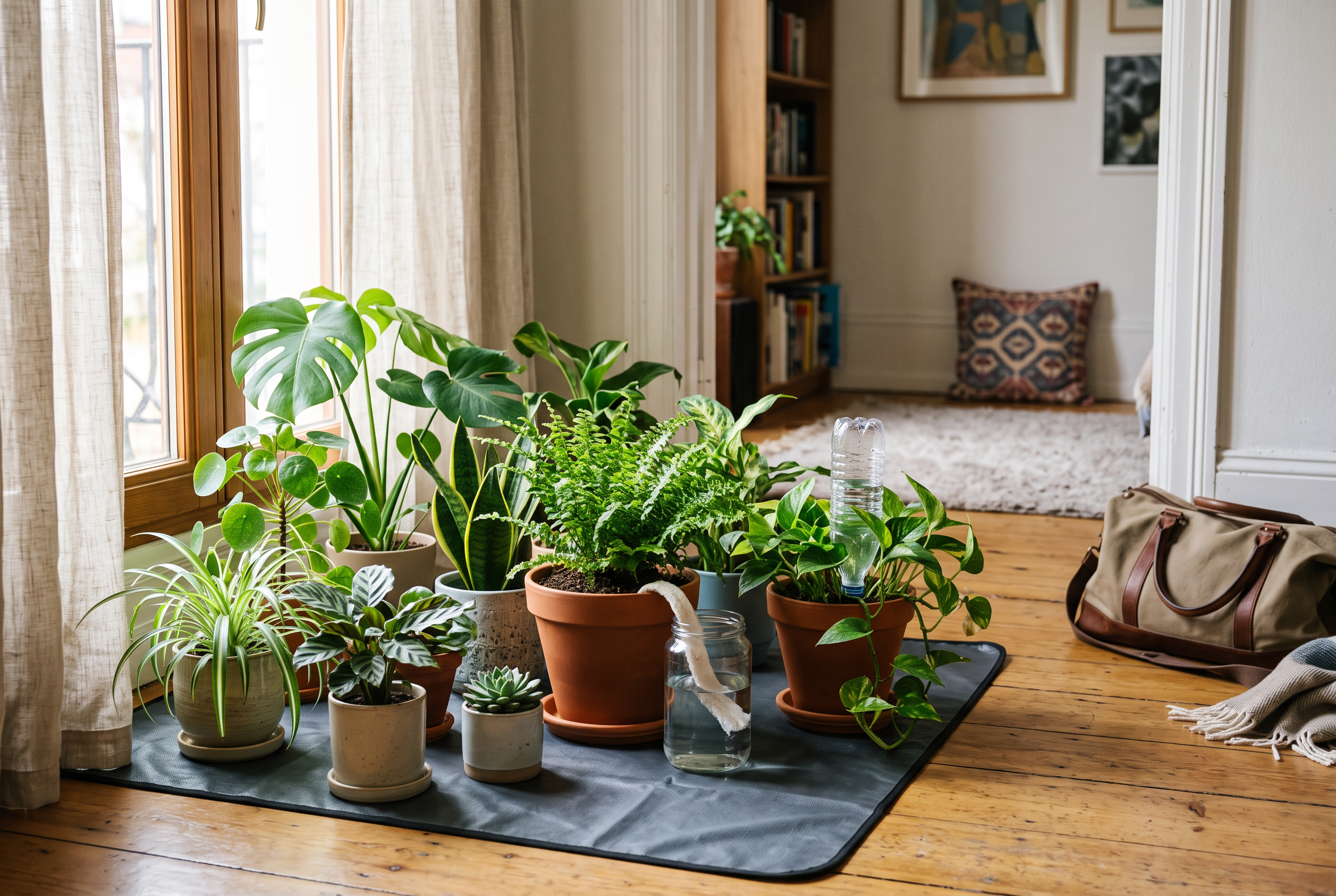
How to Water Indoor Plants While on Vacation: A Method-Matching Guide
You have a trip coming up. You also have a dozen or more pots spread across your apartment. Some sit in a bright window. Some live in a dim corner. A few need water every week, and others barely notice if you skip one.
So you search for advice, and you get a mess. One person says tie a string to a jar. Another says wrap everything in plastic. Someone else swears by a pump on a timer. All of it works for somebody. None of it tells you what to do with your plants.
Here is the problem with most advice: it skips the part that matters. The right method depends on four things you already know. How many plants you have. What kind of pots they sit in, and whether those pots drain. How many days you will be gone. And what the light and temperature in your place will be like while you are away.
Get that match wrong and you can lose plants in either direction. Drying out is the obvious risk. Overwatering is just as real. A wick or spike that keeps feeding a pot with no drainage hole can leave roots sitting in water for a week.
This guide walks you through those four inputs, then matches them to methods. Free fixes first. Low-cost DIY next. Reservoirs and timer systems after that. It ends with a dry run you can do before you leave.
- Count nights, not days — two to three nights usually needs no gear, one to two weeks needs a refillable reservoir, and three weeks or more needs a pump and timer or a sitter.
- Drainage holes come first. Passive systems keep adding water, so a pot with no exit path can stay soggy and rot roots.
- Sort plants into thirsty, medium, and tough groups and pick one method per group. Mixed collections rarely fit a single gadget.
- Ignore stated day counts on packaging. Coverage shifts with pot size, soil mix, room temperature, and light.
- Run a dry run at home for at least your trip length so you can catch a clog, a leak, or a reservoir that empties early.
The right vacation watering setup depends on four things you already know: how many plants you have, what kind of pots they sit in and whether those pots drain, how many nights you will be gone, and the light and temperature in your place while you are away. Match those inputs to a method, then test it at home before you leave.
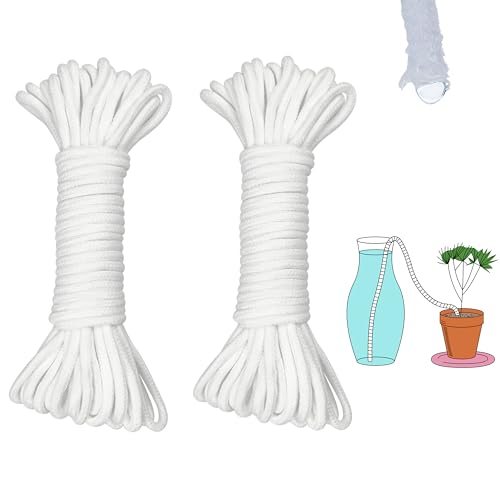
ORIMERC 60 feet 1/5 inch Self Watering Capillary Wick Cord Vacation Plant Sitter DIY Hydroponic Wicking Self-Watering Planter Pot Automatic Water System Device Potted Violet Auto Seedling Waterer Rope
Cheapest step up from free methods: cut the cord to length, prime it wet, and run it from a raised jug into the root zone of a draining pot.
Check Price on Amazon
SmartiLiving Ollas (Set of 4) | 12oz Terracotta Plant Watering Globes - Self Watering Planter Insert - Automatic Plant Watering Devices | Vacation Watering Pots for Indoor & Outdoor Plants
Buried terracotta reservoirs for pot-by-pot coverage; the 12 oz size suits roughly 6 to 10 inch pots rather than large floor planters.
Check Price on Amazon
Automatic Plant Waterer Indoor Self Watering System for 15 Potted Plants, Auto Drip Irrigation Kit Programmable Water Timer with Smart Humidity Detection, Green
For larger collections, this kit lists support for up to 15 potted plants with a programmable timer and humidity detection, so you can size it against your pot count.
Check Price on AmazonIn this guide
The Four Inputs That Decide Your Method
Before you buy or build anything, write down four things about your setup. A notes app or a scrap of paper works. These four answers point you toward the right method faster than any product review can.
1. How many plants, and how big are the pots
Count your plants. Then note the rough pot size for each one, like 4 inch, 6 inch, or 10 inch. Big pots hold more soil, and more soil holds more water. A large pot can often coast longer than a small one. But a big plant in a big pot may also drink more.
Plant count matters just as much. One method that works for three plants may be a hassle for twenty. One person on Reddit described caring for about 40 plants, with only a monstera needing weekly water. That kind of mix needs a plan, not a single gadget.
2. Pot material and drainage holes
Check each pot two ways. What is it made of, and does it have a hole in the bottom?
Unglazed terracotta is porous. Water moves out through the clay walls and evaporates, so the soil dries faster. Plastic and glazed ceramic hold moisture longer because water can only leave through the soil surface and the drainage hole.
The hole is the bigger deal. A pot with no drainage hole has nowhere for extra water to go. Passive systems keep adding water, and the soil can stay soggy. That is how roots rot. If a pot has no hole, either repot it before your trip, slip the plant into a nursery pot inside the decorative one, or skip reservoir style methods for that plant.
3. Trip length in nights
Count nights, not days. Three nights is a very different problem than fourteen. Be honest about travel delays too. If your flight home could slip a day, plan for that extra day.
Write the number down. Later sections in this guide sort methods by this one input more than any other.
4. Light and temperature while you are gone
Your apartment during a trip is not the same as your apartment now. Warm air and bright sun both speed up water use. If you turn the AC up to save money, or turn the heat down in winter, the room changes.
So note two things. Where will each plant sit, and what will you set the thermostat to? Moving plants back from a hot, bright window slows water loss. Keeping light lower is a common trick for exactly this reason.
A note on species
Plants do not share one thirst level. Succulents, snake plants, and pothos handle dry soil far better than ferns, calatheas, or a thirsty monstera. If you grow a mix, one method rarely fits all of them.
That is normal. Most mixed collections end up using two or three approaches at once. Group your plants into thirsty, medium, and tough piles now. Then match a method to each pile instead of hunting for one answer.
Trip Length: What Each Window Realistically Calls For
The longer you are gone, the more water your plants need and the less margin you have for error. Here is a rough way to think about each window. Treat these as starting points, not rules. A small pot in a warm, bright room dries out much faster than a big pot in a cool, dim one.
A long weekend (two to three nights)
Most healthy houseplants in pots with drainage holes can handle this with no gear at all. Water each plant well the day before you leave. Let the extra water drain out, then dump the saucer. Move plants back a few feet from hot, sunny windows so they use less water. Skip fertilizer. That is usually the whole plan.
Four to seven nights
This is where thirsty plants start to struggle. Water deeply, group pots together so the air around them stays a bit more humid, and lower the light a little. Small pots and fast-draining mixes may still run dry. For those few, a simple wick running from a jar of water into the soil, or a small reservoir in the pot, can bridge the gap. A capillary wick cord is one low-cost way to try this, and a watering globe is another.
One to two weeks
Now you need a refillable reservoir that holds enough water for the whole trip, not a quick top-off. Terracotta ollas, watering spikes, self-watering pots, and glass globes all work this way. Size matters more than brand. A small reservoir in a large, thirsty plant will empty early. Plan for your hungriest plant, not your average one.
Three weeks or more
At this length, passive reservoirs often run out before you get home. A pump and timer system that draws from a larger water container is the more realistic option for a bigger collection. You can also combine methods: a timer system for the thirsty plants, and nothing at all for drought-tolerant ones.
Why packaging numbers are estimates
You will see duration claims on boxes and product pages, like a certain number of days per fill. Those figures depend on pot size, soil mix, plant size, room temperature, and light. Change any one of those and the number changes. Use them to compare reservoir capacity, not to promise yourself a safe return date. The only way to know how your setup behaves is to run it at home for several days before you travel.
When to ask a person instead
For trips past about two weeks, large collections, or plants you would hate to lose, line up a sitter or a neighbor check-in as a backup. One visit partway through a long trip solves a lot of problems a device cannot, like a tipped reservoir or a clogged spike.
Leave written notes. Include which plants need water and which do not, roughly how much, where the watering can and water source are, how to refill any reservoir you set up, and your phone number. Tape the notes near the plants so they are easy to find.
Method Comparison: Which Approach Fits Which Setup
Each method below fits a different mix of plant count, pot type, and trip length. Read the table as a shortlist, not a promise. Real coverage depends on your soil mix, pot size, room temperature, and light. A warm, bright room dries pots faster than a cool, shaded one.
One rule applies to every row: pots need drainage holes. Passive systems keep adding water whether or not the plant wants it, so a pot with no exit path can stay soggy for days. That is the most common way plants die while you are gone, not thirst.
How to read the table
Plant count is the first filter. If you keep a handful of plants, pot-by-pot options like ollas, spikes, or globes are simple and quiet. If you keep dozens, refilling that many small reservoirs gets unrealistic, and a single shared reservoir with tubing makes more sense.
Setup effort matters more than it looks. A self-watering pot means repotting, which is work you want done weeks before you leave, not the night before. A drip kit means routing tubing, placing emitters, and watching for drips where you do not want them.
Cheap and free comes first. Grouping plants away from hot windows and soaking them well before you go costs nothing and solves plenty of short trips. A capillary wick cord is the next step up and still simple. Try those before buying a system.
No method has a guaranteed day count. Ignore any claim that promises a fixed number of days. The only way to learn your numbers is a dry run at home while you are still there to watch.
The sections that follow walk through each family in order: free methods and DIY wicks, then terracotta ollas and spikes, then globes and self-watering pots, then pump and timer kits for bigger collections.
Start With the Free Methods (and a Low-Cost DIY Wick)
Before you buy anything, do the simple stuff. For many short trips, it is enough.
Water, drain, then set the stage
Water each plant well the day you leave or the day before. Let the water run through and let the pot drain all the way. Dump any water left in the saucer. Standing water sitting against the drain hole for days is a rot risk, not a backup supply.
Then group your plants close together on a table or floor. Plants release moisture, so a cluster holds a little more humidity around the leaves than one pot alone.
Move pots back from hot, sunny windows into bright indirect light. Less direct sun means slower drying. It also means less heat stress while nobody is home to check.
If you cool the apartment while you are gone, go only as far as your plants handle comfortably. Many tropical houseplants dislike cold rooms. Cooler and dimmer slows water use, but do not push it so far that you trade thirst for cold damage.
For trips of just a few days, set pots on a damp towel or in a shallow tray with a thin layer of water. The pot picks up a little moisture through the drain hole. Keep the water shallow so the soil is not sitting soaked.
The plastic tent, and why it has limits
Some growers loosely wrap plants in clear plastic to trap humidity, and keep the light low so the inside does not overheat. It can stretch a few days.
The limits matter. A sealed, warm, bright spot turns into a damp box. That invites mold on the soil surface and rot at the stems. Leave the plastic loose, never tight, and skip this one if your place stays warm while you are away.
The DIY wick method
A wick is a cord that moves water by capillary action, the same way a paper towel pulls up a spill. One end sits in a water container. The other end sits in the pot, pushed down into the root zone, not just laid on top.
Three things make it work:
- Prime the cord first. Soak it until it is wet all the way through. A dry wick often moves nothing.
- Place the container slightly above the pot. A jug or bowl on a book or stool helps gravity work with the wick instead of against it.
- Match it to the right pot. Wicks suit pots with drainage holes and loose, well draining mix. In dense soil that already holds water, a wick can keep the root zone too wet.
Cord sold for this job is cheap and comes in long lengths you can cut to fit each pot.
ORIMERC 60 feet 1/5 inch Self Watering Capillary Wick Cord Vacation Plant Sitter DIY Hydroponic Wicking Self-Watering Planter Pot Automatic Water System Device Potted Violet Auto Seedling Waterer Rope
Check Price on AmazonRun one pot on a wick for a week while you are home first. That shows you how fast your container empties and whether the soil stays damp or soggy.
Terracotta Ollas and Watering Spikes: Small, Quiet, Pot-by-Pot
Terracotta is unglazed clay, and it is porous. That means water can seep slowly through the clay wall. When you bury a clay reservoir in a pot, the dry soil around it pulls moisture out. As the soil gets wetter, the pull slows down. That simple back and forth is why these devices feel gentler than dumping a big drink of water into a pot before you leave.
There are two common shapes. An olla is a clay vessel with a wider body and a neck that stays above the soil. A spike is a narrow clay cone you push into the soil, then top with a bottle or a cap.
Buried ollas hold more water
Size matters more than style. A wider olla holds more water than a thin spike, so it can keep feeding soil for longer before it runs dry. A small insert holding around 12 ounces works best in small and medium pots, roughly 6 to 10 inches across. In a large floor pot, that same insert only wets the soil near it. The far side of the root ball may stay dry.
SmartiLiving Ollas (Set of 4) | 12oz Terracotta Plant Watering Globes - Self Watering Planter Insert - Automatic Plant Watering Devices | Vacation Watering Pots for Indoor & Outdoor Plants
Check Price on AmazonSpikes with their own lids work the same way, just with a smaller reservoir. They are easy to tuck into a crowded shelf of small pots, and the lid helps slow evaporation from the top.

Spikes that use a bottle
Some spikes are made to hold a bottle upside down, like a wine bottle. The bottle becomes the reservoir, so you can carry more water than the clay alone. The trade-off is balance. A tall bottle in soft soil can tip, and a tipped bottle can empty onto your floor. Use these only on a level surface, in a pot heavy enough to stay put, and push the spike deep enough that it feels solid. A bottle that is lighter and shorter is easier to keep upright.

20 Pack Terracotta Plant Watering Spikes, Self-Watering Stakes for Wine Bottles, Porous Clay, Reusable (Red A)
Check Price on AmazonReal limitations to plan around
- Clay can clog. Minerals from tap water and fine soil particles can slowly seal the pores. Flow drops off, sometimes without any sign on the outside.
- Clay can crack. Pushing a spike into hard, dry soil is a common way to snap the tip. Water the pot first, let it soften, then make a hole with a pencil or chopstick and slide the spike in.
- Refill size sets your limit. A small reservoir does not stretch to cover a long trip. Judge by how much water the device holds against how much that plant normally drinks in a week.
- Compacted soil blocks contact. If the soil has pulled away from the pot walls or packed hard, moisture will not spread evenly.
These are per-pot tools. Ten plants means ten inserts, ten refills, and ten setups. Fill and watch them for a few days before your trip so you learn how fast each one empties in your own soil and your own apartment.
Glass Globes and Self-Watering Pots: Built-In Reservoirs
Some methods put the water supply right in the pot. Glass globes do this on the surface. Self-watering planters do it underneath. Both are hands-off once they are set up, but they work in very different ways.
Glass watering globes
A globe is a bulb with a long thin stem. You fill the bulb, then push the stem into damp soil. Water leaves slowly as the soil dries and pulls it out.
Globes hold a small amount of water. That makes them a better match for small and medium pots than for a large floor plant. One globe in a big pot of dry mix can empty in a day and still leave most of the root ball untouched.
Two things go wrong, and they go wrong in opposite directions. In fine, dense soil, mud can seal the stem and the globe stops releasing water. In loose, chunky mix, water can run straight through and dump the whole bulb at once. Neither problem shows up in the package instructions. Both show up in your actual pot.
So test first. Fill a globe, set it in the real pot with the real soil, and check the water level over two or three days at home. If the level has not moved, the stem is likely blocked. If it is empty by morning, the mix drains too fast for that globe.
Sets give you one per pot, which matters when you have several plants to cover.


Smaller globes suit smaller pots on shelves and windowsills, where a large bulb would tip the plant or look out of place.

Self-watering planters
A self-watering pot has a water tank built into the base. A wick or soil column connects the tank to the root zone, so the plant draws water up as it needs it. There is no stem to clog and nothing sitting on the soil surface.
The catch is that this means changing your plant’s container. Repotting is a small shock, and roots need time to settle into the new mix. Do it at least two weeks before you leave, ideally longer. Repotting the night before a flight is the worst version of this plan.
How long the tank lasts depends on its size compared to the pot and plant above it. A big plant in a pot with a shallow tank drinks it down fast. A modest plant in a roomier planter stretches further. Fill the tank, then watch how fast the level drops during a normal week at home. That gives you a real number for your plant, not a guess.

One clear limit: constant moisture does not suit every plant. Succulents, cacti, snake plants, and ZZ plants prefer to dry out between drinks. A steady reservoir can keep their roots wetter than they like, which leads to rot. Those plants are usually safer left alone with one good watering before you go.
Pump and Timer Systems for Larger Collections
If you have ten, twenty, or forty pots, wicks and spikes get tedious fast. A pump and timer system handles the whole group from one place. You set a bucket or jug of water on the floor. A small pump sits in the water. Thin tubing runs from the pump to a dripper at each pot. A timer turns the pump on for a set number of seconds or minutes, then shuts it off. Some units run on batteries. Some plug into an outlet. Some offer both, with batteries as a backup.
Sizing the reservoir
Do the math before you buy anything. Start with how much water one plant normally takes. Measure it next time you water with a measuring cup. Add up that amount for every plant on the system. That is one watering cycle. Then decide how many cycles your trip needs. A ten day trip with watering every four days is about three cycles. Multiply, then add extra water as margin, because drippers rarely deliver perfectly even amounts. Running out of water halfway through is one of the most common ways these setups fail.
Failure modes to plan around
These systems are mechanical, so plan for mechanical problems:
- Battery drain. Put in fresh batteries right before you leave. Keep a plug-in option if the model allows it.
- Clogged drippers. Use clean water. Avoid anything with sediment in it.
- Uneven flow. Pots closest to the pump often get more water than the ones at the end of the line. Check each dripper during a dry run and adjust tubing length or pot placement.
- Tubing that pops loose. A line that slips out can empty the whole reservoir onto your floor. Press fittings fully together and secure tubing so it cannot get tugged.
- Reservoir running dry. Mark a fill line and confirm your math.
Keep spills away from the neighbors
In an apartment or condo, a leak is not just your problem. Set the reservoir and tubing in a bathtub, on a tiled floor, or inside a larger tray or bin that can catch water. Keep everything away from shared walls and away from any spot where water could reach the unit below you.
Check specs against your plant count
Models differ in reservoir size, number of outlets, and how flexible the timer settings are. Match those numbers to your actual pot count before ordering.

Automatic Plant Waterer Indoor Self Watering System for 15 Potted Plants, Auto Drip Irrigation Kit Programmable Water Timer with Smart Humidity Detection, Green
Check Price on AmazonThe programmable 15 plant kit lists support for up to 15 potted plants with a programmable timer and humidity detection, which gives you a clear starting point for comparison. The Moistenland indoor watering system is another drip style option built for indoor pots.
Treat any stated coverage duration as a rough guide, not a promise. Those numbers depend on pot size, soil mix, and room temperature. Run the system for several days at home before your trip, and watch what each pot actually gets.
For a large or valuable collection on a long trip, pair the system with a friend who can check in once. That removes most of the risk.
Your Pre-Trip Dry Run Checklist
A dry run means you set up your watering method at home and let it work while you are still there to watch. This is the single best way to catch problems. A clog, a leak, or a reservoir that empties in two days is easy to fix on a Tuesday at home. It is not fixable from a hotel.
Start your dry run at least one week before you leave. If your trip is five days, run the test for five days.
Before you start the test
- Check the soil in each pot with your finger. Push it in about an inch. Note if it feels wet, damp, or dry.
- Confirm every pot has a drainage hole. If a pot has no hole, passive systems can leave the roots sitting in water.
- Empty all saucers. You want to see new water collecting, not old water.
- Fill reservoirs, globes, ollas, or jugs all the way. Write down the time and date.
- Put down a towel or tray under anything you worry about. Shelves, wood floors, and rugs are the usual victims.
During the test
- Look at the water level each day. Note how many days a full reservoir lasts. If it drains in half your trip length, you need a bigger reservoir, more units, or fewer plants on one system.
- On day three, check that emitters, spikes, or wicks still move water. Clay spikes and small emitters can clog with soil or mineral buildup.
- Check saucers for standing water. If a saucer stays full, the system is giving too much. Slow the flow, use a smaller reservoir, or move that plant off the system.
- Feel the soil again. Soggy means too much water. Bone dry at the surface and dry an inch down means too little.
- Look under pots, along tubing, and at every connection for drips. Tubing joints and lids are the most common leak points.
Right before you leave
- Put fresh batteries in any timer or pump. Do not reuse the batteries from the dry run.
- Refill every reservoir to the top.
- Move plants away from hot windows and heat vents. Lower light slows water use.
- Take photos of the finished setup from a few angles. If a neighbor needs to check on things, photos make your instructions clear.
- Write a one page note. List each plant, how much water it needs, how often, and your phone number. Add where the water shutoff or power strip is if you used a pump.
You can keep this checklist by printing this page and ticking items off as you go.
If the dry run shows your plants drying out faster than your system can keep up, that is useful news. Ask a sitter or neighbor to stop by once mid trip. One short visit covers a lot of gaps.
Frequently Asked Questions
Can I just water heavily before I leave?
For a short trip, often yes. Water deeply, let the pot drain fully, then dump any water left in the saucer. This works best for plants that like to dry out between drinks. It works poorly for thirsty plants in small pots. Soil sitting in a closed saucer can stay soggy and rot roots. Check your soil a few days before you go so you know which plants actually need water.
What do I do with pots that have no drainage hole?
Treat those pots as the highest risk in your home. Without a hole, extra water has nowhere to go. Skip any passive system that keeps adding water to them. Your safer options are a lighter hand watering before you leave, or moving the plant into a nursery pot with holes and setting that inside the decorative pot. Pull the inner pot out, water it over the sink, let it drain, then drop it back in.
Should I move my plants into the bathtub?
Grouping plants in one spot can help, since they share humidity and are easier to set up. A tub works if the room gets real light from a window. Most bathrooms do not. A dark tub for two weeks can do more harm than dry soil. A bright hallway, a spare bedroom floor, or a spot a few feet back from a sunny window is usually a better choice.
Do I need a different method for each plant?
You may. Plants differ in how fast they drink, and pot material and size change things too. A simple approach is to sort your plants into groups: low need, medium need, and high need. Then pick one method per group. Mixing methods is normal and often safer than forcing one system on everything.
What happens if a globe or spike empties early?
The plant goes back to drying out on its own. That is why the soil should be moist, not bone dry, when you set the device up. Flow speed depends on your soil mix, pot size, and how warm and dry your home is. Those things are hard to predict, so run the setup for several days at home before your trip and see how fast the level drops.
Can I leave grow lights on a timer?
Yes, and a timer helps keep light steady while you are gone. Keep the light at the same distance and schedule the plants are already used to. Do not raise the intensity before you leave. More light means more water use, which works against you.
When is a plant sitter worth it?
Consider one when your trip runs long, when you have a large collection, or when you own plants you would be upset to lose. A sitter also covers things no device can, like a leak, a dropped pot, or a heat wave. Leave written notes: which plants to water, how much, and which ones to leave alone. A sitter who waters everything equally can cause the same damage as nobody showing up.
Next Steps Before You Book
You do not need to solve everything today. You need three steps, in order, finished before your trip is locked in.
Step 1: Write down your four inputs
Grab paper or your notes app. For each plant, write the name, the pot material, whether the pot has a drainage hole, and how often you water it now. Then add two lines at the top: how many days you will be gone, and what the room light and temperature will be like while you are out. If you cannot say how often a plant needs water, that is your first job. Check the soil every few days for a week or two and write down what you find.
This list is the whole decision. Without it, you are guessing.
Step 2: Pick one method per plant group
Sort your list into groups. Thirsty plants in small plastic pots are one group. Drought tolerant plants in terracotta are another. Big floor plants are often a third. You do not have to use the same method for every plant, and trying to usually makes things harder.
Use this recap to match each group:
If a group holds big, expensive, or very thirsty plants and your trip is long, plan a sitter for that group instead. A friend with a key and clear written instructions beats a system you are unsure about.
Step 3: Schedule the dry run
This is the step almost everyone skips, and it is the one that saves plants. Set up your chosen method at home, at least two weeks before you leave. Run it exactly as you plan to while you are gone. Then check the soil, the saucers, the floor, and the reservoir level every day or two.
Two weeks gives you time to fix a slow wicking cord, swap a clogged spike, reseat a leaking fitting on a pump and timer kit, or call a sitter if nothing works. One week is tight. The night before is too late.
When the dry run looks steady, write your final setup down and tape it near your plants. Then book the trip.
Sources and Further Reading
- Suggestions for watering plants when traveling?
- How to keep indoor plants watered while away from home …
- How I watered my plants on vacation : r/houseplants
- Keep Indoor Plants Alive While on Vacation: Complete Guide
- The Hack That’ll Keep All Of Your Indoor Plants Alive While …
- Tips for watering indoor plants while away on vacation
- How can I water my houseplants while I am gone?
- how to water plants while away? i’ll be gone for 3 weeks
- Little Known Secrets of #Self-watering Plants
- How I keep my indoor and outdoor plants alive when away
- Easy Plant Watering Method for Vacation Care
- keeping indoor plants watered while on vacation??


