 Plants While Away
How Long Can Houseplants Actually Go Without Water? A Trip-Length Planning Chart
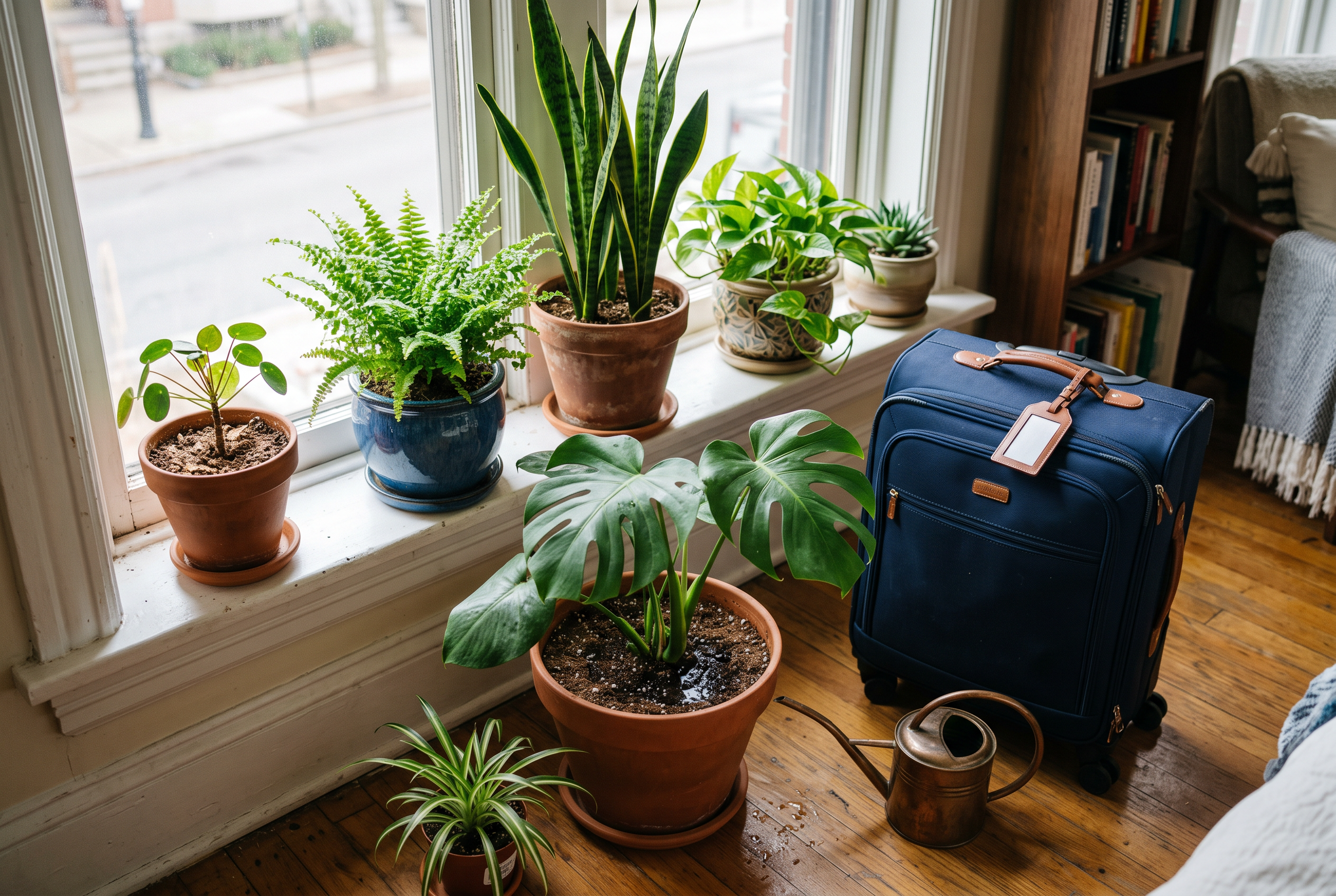
You search “how long can houseplants go without water” and get answers all over the map. A few days. Two weeks. A month. Two months. None of those numbers are wrong, exactly. They just belong to different plants in different homes.
A maidenhair fern in a small terracotta pot by a sunny window can dry out in a couple of days. A ZZ plant or snake plant in a glazed pot can often sit for weeks. Some sources report succulents and similar plants going 45 to 60 days between waterings. Pothos is often described as lasting about two to three weeks. Those gaps are huge, and they exist because the answer depends on your pots, your light, your air, and your season.
So the useful question is not “how many days can houseplants survive?” It is “how many days can my plants last, in my apartment, in this season?”
That is what this guide helps you figure out. You will learn the six variables that speed up or slow down drying, a simple two-week way to measure your own drying window at home, and a planning chart organized by trip length. For each trip band, you will see which plant and pot combinations are usually low risk, which are borderline, and which need a watering method or a sitter.
Treat every range here as a planning estimate, not a promise. Test your numbers at home before you count on them.
- Six factors set your drying window: pot material, pot size versus plant, mix type, light level, temperature and forced air, and plant category.
- Log the date each plant actually needs water for two weeks, then plan around your fastest-drying plant, not the average.
- Trips of 3 to 7 days usually need no gear for succulents, snake plants, ZZ plants, and established tropical foliage, just a deep watering and a move back from hot glass.
- Around two weeks is where passive options fit: globes, clay spikes, ollas, wick cord, or a self-watering planter, sized to how much water that pot really uses.
- At three weeks or longer, a timer-based pumped system or a real person is the safer plan, and every pot should have a drainage hole before you add any watering device.
There is no single number of days a houseplant can go without water. Your pots, light, air, and plant types set that window, and you can measure it at home in about two weeks. Here is how to estimate your own drying window and match it to your trip length.

20 Pack Terracotta Plant Watering Spikes, Self-Watering Stakes for Wine Bottles, Porous Clay, Reusable (Red A)
Terracotta spikes made for wine bottles suit narrow pots up to roughly 8 inches on about a two-week trip, and this pack of 20 reusable clay stakes covers a whole shelf. Water the pot first so the mix is damp and settled, then insert the spike.
Check Price on Amazon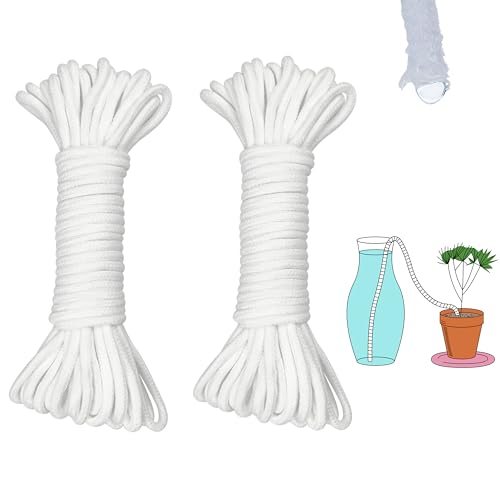
ORIMERC 60 feet 1/5 inch Self Watering Capillary Wick Cord Vacation Plant Sitter DIY Hydroponic Wicking Self-Watering Planter Pot Automatic Water System Device Potted Violet Auto Seedling Waterer Rope
A 60-foot spool of capillary wick cord lets several clustered pots draw from one shared jug with no power involved. Cut lengths to suit each pot and run it for a few days at home to confirm the wicks keep pulling.
Check Price on Amazon
Automatic Plant Waterer Indoor Self Watering System for 15 Potted Plants, Auto Drip Irrigation Kit Programmable Water Timer with Smart Humidity Detection, Green
For absences of three weeks or more, this programmable drip kit is rated for up to 15 potted plants and includes a timer with humidity detection, so it refills on a schedule instead of relying on soil contact. Do a full dry run and check reservoir volume, emitters, and leak points before you leave.
Check Price on AmazonIn this guide
The Six Variables That Set Your Drying Window
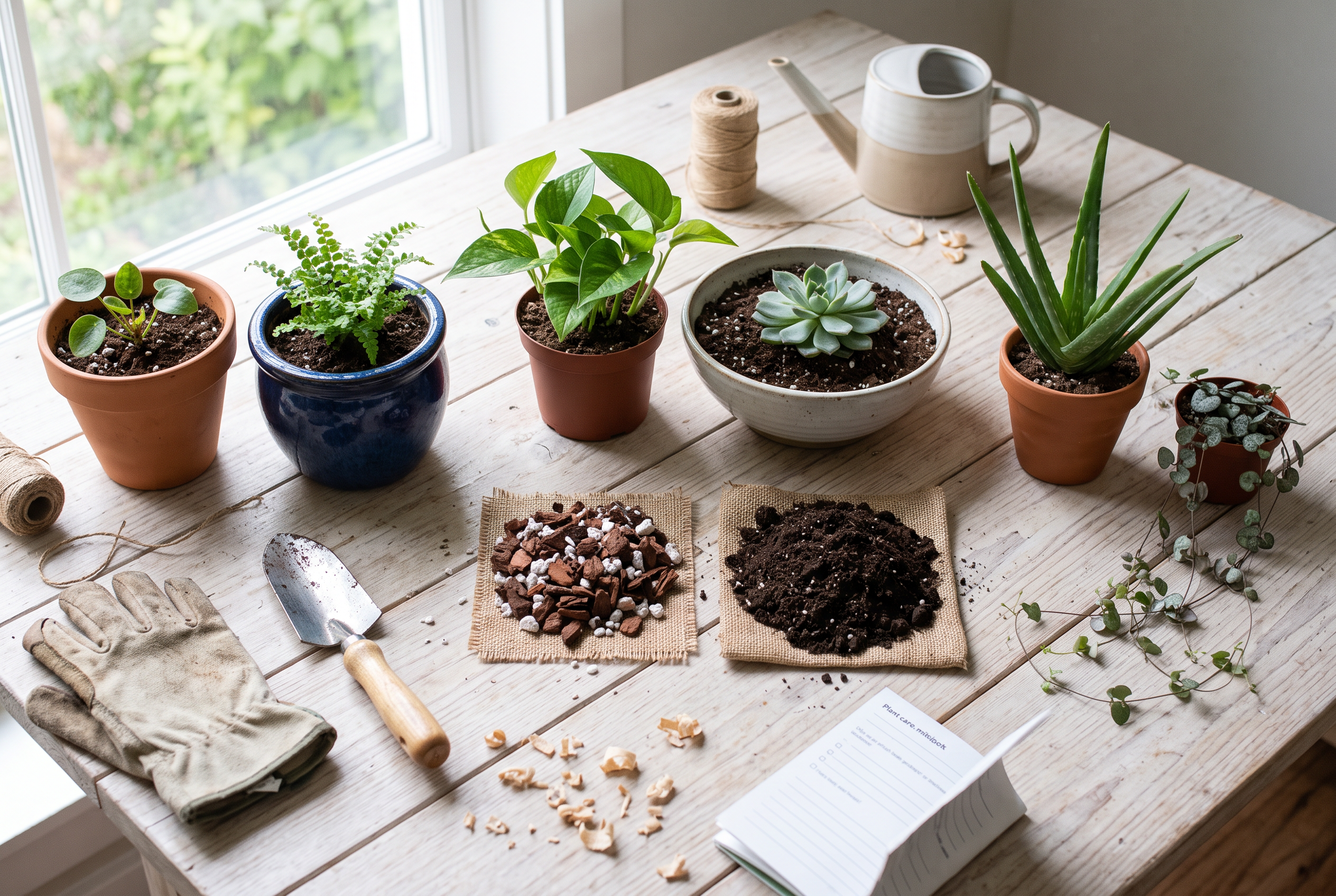
Your drying window is the number of days the soil stays moist enough to keep a plant stable. Six things control it. All six are things you can see or feel in your own home, which means you can estimate your window without any special tools.
1. Pot material
Unglazed terracotta is raw clay with no shiny coating. It is porous, so water moves out through the walls of the pot, not just through the soil surface. Pots like this dry fastest.
Glazed ceramic and plastic pots hold moisture much longer. The walls do not breathe. Water only leaves through the top of the soil and through the plant itself. Two identical pothos, one in bare terracotta and one in a glazed pot, can easily be a week apart in how long they stay moist.
2. Pot size compared to the plant
Look at how much soil surrounds the roots. A large plant crammed into a small pot is mostly root and very little soil. There is almost no water storage, so it dries out quickly.
The same plant in a wider pot with several inches of soil around the root ball holds a bigger reserve. Bigger soil volume usually means a longer window.
3. Potting mix type
Chunky mixes with bark, perlite, or sand drain fast and hold less water. Cactus and succulent mixes are built this way on purpose.
Peat-heavy or coco-based mixes hold water longer. That is good for a trip, with one catch. If the mix has gone hard and dry before you leave, water can run down the sides and out the drain hole instead of soaking in. Water deeply a few days before your trip so the mix is evenly damp, not just wet on top.
4. Light level and window direction
More light means more growth and faster water use. South and west facing windows in the US usually get the strongest light. North facing windows get the least. East facing sits in the middle.
Plants sitting right against a bright window dry faster than the same plant a few feet back in the room. Moving plants away from direct sun before a trip lowers their water use while you are gone.
5. Temperature and forced air
Warm, moving air pulls water out of soil and leaves. If your heat or air conditioning runs on a schedule while you are away, that air keeps drying things out even with nobody home.
Check where your vents are. A plant sitting under or beside a vent dries faster than one in a quiet corner.
6. Plant category
Succulents, cacti, snake plants, and ZZ plants store water in thick leaves or roots. Reports commonly describe these going weeks or longer between waterings.
Tropical foliage like pothos and philodendron sits in the middle, often a couple of weeks depending on the other five factors. Ferns, calatheas, and other thin-leaved, moisture-loving plants have the shortest window and usually need help first.
Treat all of these as general ranges. Your home sets the real numbers.
Estimate Your Own Window in Two Weeks of Observation
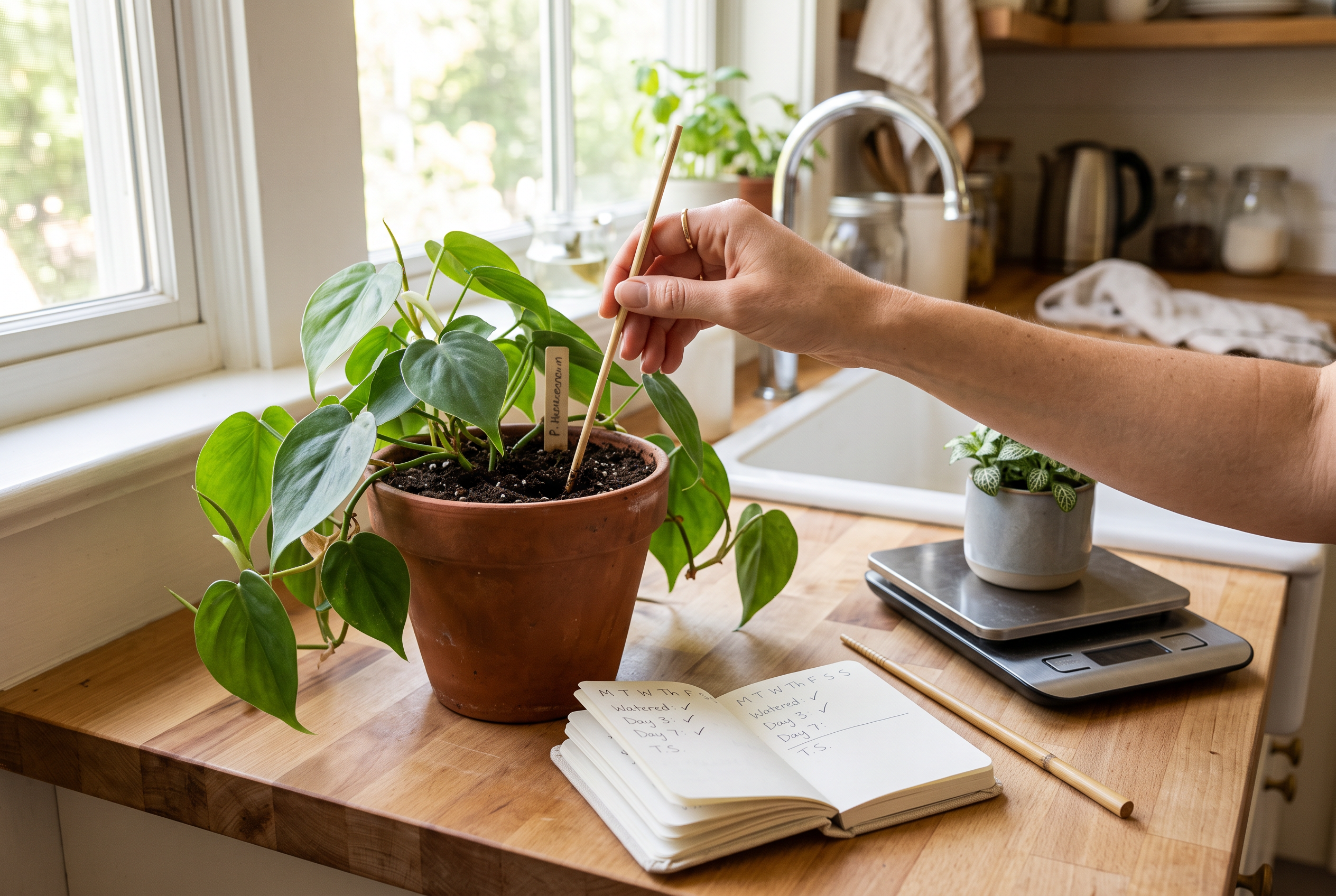
General ranges are a starting point. Your apartment is the real test. The good news is that you already have everything you need to get a personal number. It costs nothing. It just takes two weeks of paying attention before you leave.
Start this at least two weeks before your trip. If your trip is sooner, do a shorter version and treat the result as rough.
Step 1: Check moisture at two depths
Push a finger into the soil about one inch down. That tells you about the surface only. The top inch can feel bone dry while the root zone is still damp.
Then push a wooden skewer, chopstick, or pencil down toward the middle of the pot. Pull it out and look. Dark, cool, or clinging soil means there is still moisture down there. A clean, dry stick means the pot is drying out through most of its depth.
Use the deeper check to decide when a plant truly needs water. Use both checks on the same plant each time so your readings stay consistent.
Step 2: Write down the date each plant actually needed water
Keep a simple list on your phone or a piece of paper. One line per plant. Each time a plant passes your dryness check and you water it, write the date.
Do not water on a fixed schedule during these two weeks. Water only when the stick test says to. A schedule hides the information you are trying to collect.
After two weeks you will have real intervals. Maybe the fern needed water on day 4 and again on day 8. Maybe the snake plant never needed water at all. That gap is exactly what you are looking for.
Step 3: Rank your plants from fastest to slowest
List your plants in order, shortest interval first. Note the pot material and size next to each name. You will probably see a pattern. Small terracotta pots in bright windows sit at the top. Large plastic or glazed pots in dimmer corners sit at the bottom.
The plant at the top of that list is your planning constraint. Not the average. Not the toughest plant you own.
If one calathea needs water every 4 days, your collection behaves like a 4 day collection, even if everything else could coast for three weeks. You have two honest choices. Give that one plant its own watering help, or move it to a sitter’s care, or accept that it may suffer while the rest are fine.
A few things that can shift your numbers
Your two week log reflects the conditions during those two weeks. Things change. Summer heat, winter forced air, and a thermostat you set back while away can all change how fast pots dry. Longer days and stronger light speed drying too.
So treat your number as a planning estimate, not a promise. Build in a cushion of a day or two on the short side. Then match your trip length to a method and test that method at home before you rely on it.
The Trip-Length Planning Chart
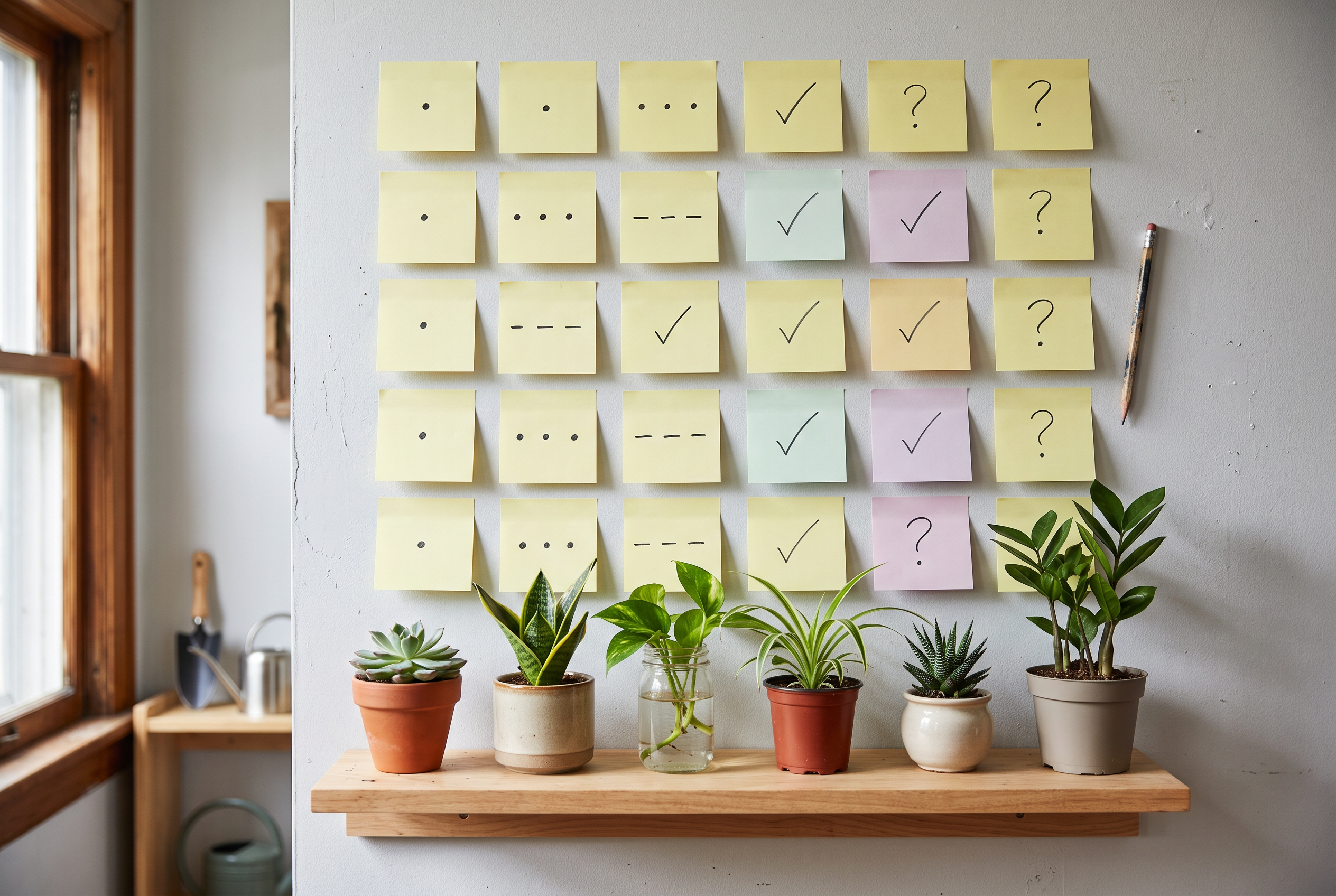
Use this chart as a starting point, not a promise. It sorts common plant types by pot material across four trip bands. Then it marks each combination as one of three things:
- Low risk: Most healthy plants in this group usually hold out with no help, if you water deeply right before you leave.
- Borderline: Could be fine, could come back stressed. Depends on your light, heat, and pot size. Test at home first.
- Needs help: Plan on a watering method or a sitter.
How to read the rows
“Standard tropical foliage” covers things like monsteras, philodendrons, peace lilies, dracaenas, and rubber plants. These sit in the middle. They are not desert plants, but they are not fussy about a few dry days either.
Succulents and cacti sit at the easy end. They are built to store water, and many go for months in normal indoor conditions. Snake plants and ZZ plants behave much the same way, and reports of them going a month or more without water are common. Pothos is a step thirstier. Sources put it closer to two or three weeks before real damage shows.
Ferns and calatheas are the opposite problem. They want steady moisture, and they show stress fast. Crispy edges often do not grow back on the same leaf.
Why your results will differ
Every box above shifts with your home. Expect to move one band stricter when:
- It is summer and the air conditioning is running dry and constant.
- Your pots sit in a bright south or west window.
- The plant is root bound in a small pot with chunky, fast draining mix.
- Your building runs forced-air heat in winter.
You can often move one band easier in cool, dim, low season conditions. Moving plants back from a hot window also stretches the window, since plants in lower light take up less water.
These are general ranges pulled from common guidance, not measurements from your apartment. Before you lean on any of it, do the two weeks of observation described earlier and write down how your own plants behave. Then match your real drying window to the trip band sections below.
Trips of 3 to 7 Days: Usually Less Than You Think
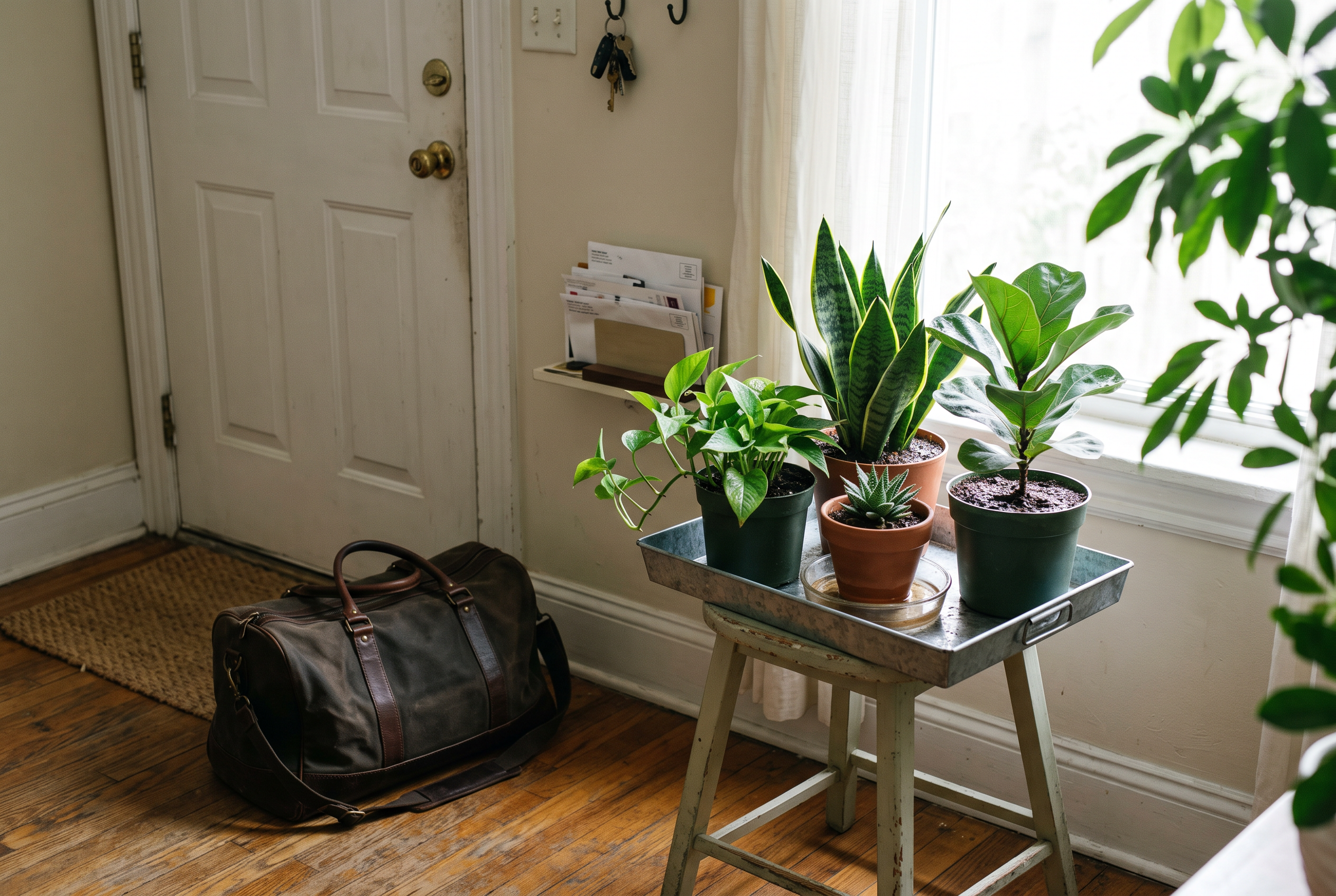
For a long weekend, most people worry more than they need to. Water your plants well the day before you leave, and a lot of them will be fine with no device at all.
That usually covers succulents and cacti, which are known for going weeks or longer between drinks. It also covers established tropical foliage in pots that are a sensible size for the plant. Pothos, for example, is often described as holding on for two to three weeks without water. Snake plants and ZZ plants are even tougher. Drought tolerant types are often happier a little dry than a little soggy, since overwatering is the bigger risk for them.
So for three to seven days, your real job is simple. Water deeply until it drains from the bottom. Dump the excess from any saucers. Move plants back from the hottest, brightest glass. Then go.
The exceptions worth a small reservoir
A few setups dry out much faster than the rest of your shelf. Watch for these:
- Small terracotta pots. Unglazed clay lets water escape through the pot walls, not just the soil surface.
- Seedlings and young plants. Their roots are shallow and small, so they run out of reach quickly.
- Recently repotted plants. Fresh mix and disturbed roots make water uptake less predictable.
- Known fast driers in a bright south or west window. If a plant needs water every three or four days at home, a five day trip is already past its limit.
- Ferns and calatheas. These are the thirsty end of the houseplant world.
For those few pots, a small top up reservoir can bridge the gap.
How glass watering globes work
A globe is a glass bulb with a long thin stem. You fill it, then push the stem into damp soil. Soil contact slows the water release, and air has to bubble back in for water to come out. As the soil dries, water trickles in.
That design fits short trips well. The capacity is small, so a globe is a top up, not a water supply for a month. Larger globe sets give you more volume per pot and cover more pots at once.


Smaller globes suit small pots, where a big dose of water would be too much.

The one failure mode to plan for
Globes depend on soil holding the stem snugly. In loose, chunky, or very dry mix, the stem can sit in an air pocket. Then the globe can empty all at once. That leaves a soaked pot now and nothing later, which is the overwatering risk in reverse order.
Two habits lower that risk. Water the pot first so the mix is damp and settled, then insert the stem. And set the globe up a week before your trip while you are still home. Check it daily. If it drains in a few hours, that pot or that mix is wrong for a globe, and you want to know that before you leave.
Two-Week Trips: Where Passive Systems Earn Their Place
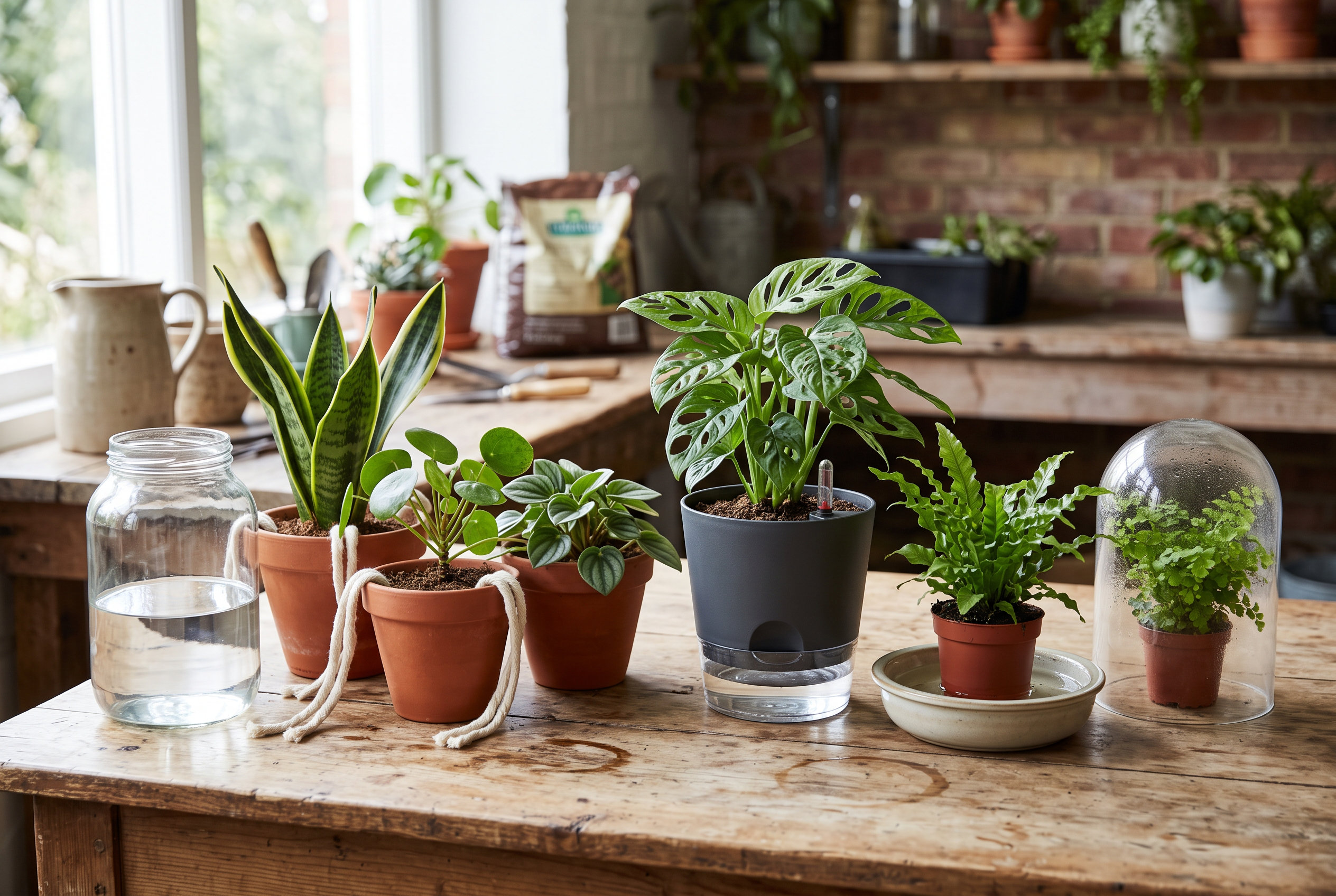
Two weeks is the point where most collections need some help. Succulents, cacti, snake plants, and ZZ plants are often still fine. Gardeners commonly report these going a month or more, and some sources put certain drought-tolerant plants at 45 to 60 days. Pothos and similar easygoing vines are usually described as lasting about two to three weeks, which puts them right at the edge. Ferns, calatheas, and anything in a small terracotta pot in a bright window are almost certainly over their limit.
So for a two-week trip, sort your plants into two piles. Leave the tough, slow-drying ones alone. Give the fast-driers a passive system.
Match the method to the pot
For narrow pots up to about 8 inches across, a terracotta spike with a bottle reservoir is the simplest setup. The spike goes in the soil, a filled bottle goes in the spike, and water moves slowly through the clay.
20 Pack Terracotta Plant Watering Spikes, Self-Watering Stakes for Wine Bottles, Porous Clay, Reusable (Red A)
Check Price on AmazonSome spikes come with their own lids and caps instead of relying on a wine bottle, which gives you more control over what container you use.

For wider pots, a buried olla usually spreads water better than a single spike. An olla is a small terracotta vessel you sink into the soil and fill with water. Sets of small ollas are sold in reservoir sizes measured in ounces, so you can check capacity before you buy.

SmartiLiving Ollas (Set of 4) | 12oz Terracotta Plant Watering Globes - Self Watering Planter Insert - Automatic Plant Watering Devices | Vacation Watering Pots for Indoor & Outdoor Plants
Check Price on AmazonIf you have several pots clustered together, wick cord is worth a look. You run one end of the cord into the soil and the other into a jug of water on a nearby surface. One long spool can serve many pots.
ORIMERC 60 feet 1/5 inch Self Watering Capillary Wick Cord Vacation Plant Sitter DIY Hydroponic Wicking Self-Watering Planter Pot Automatic Water System Device Potted Violet Auto Seedling Waterer Rope
Check Price on AmazonIf the same plant always dries out first, repotting it into a self-watering planter before the trip can fix the problem for good. These pots hold water in a built-in reservoir below the soil.

Size the reservoir to the pot
A 12 ounce reservoir will not carry a large pot through 14 days. Before you commit, look at how much water you normally give that plant and how often. If you water a pot with two cups every five days, two weeks means roughly six cups. Your reservoir needs to be in that neighborhood, or you need more than one.
Test at home first, and check drainage
Set the system up at least a week before you leave and watch it. Spikes can clog. Wicks can dry out and stop pulling. Reservoirs can empty faster than expected in a warm, dry apartment with forced air running.
One warning matters more than the rest. Passive systems keep soil steadily moist, and soil that stays wet in a pot without drainage holes leads to root rot. Overwatering kills more houseplants than a dry spell does. If a pot has no drainage hole, fix that first. Otherwise you are trading one problem for a worse one.
Three Weeks or Longer: Pumped Systems and When to Call a Sitter
At three weeks and beyond, your plant list splits in two.
Drought-tolerant plants often ride it out. Snake plants, ZZ plants, aloe, jade, and cacti are commonly reported to go many weeks, and some sources describe succulents going months without water. Dry soil is the safer side of the line for these plants, since overwatering is the bigger risk.
Everything else needs a plan. Tropical foliage in plastic or glazed pots, and anything in a small pot in bright light, will almost certainly run out of water before you get home. Ferns and calatheas should be treated as high-need no matter what.
What a pumped system does
A pumped kit sits in a large water container, usually a bucket or jug you supply. A small pump runs on a timer and pushes water through thin tubing to drip emitters you place in each pot. Unlike wicks or spikes, it can refill many pots on a schedule you set.

Automatic Plant Waterer Indoor Self Watering System for 15 Potted Plants, Auto Drip Irrigation Kit Programmable Water Timer with Smart Humidity Detection, Green
Check Price on AmazonThe second kit above is rated for up to 15 potted plants and includes a programmable timer with humidity detection. Treat any coverage number as a starting point, not a promise. Flow rate changes with tubing length, pot height, soil mix, and how thirsty your room is.
Five things to check before you rely on one
- Reservoir math. Add up how much water each plant normally takes per watering. Multiply by the number of waterings your trip needs. Your container has to hold that much, plus extra. If the math is tight, the system is the wrong tool.
- Power. Know whether your unit runs on batteries, a USB adapter, or both. Fresh batteries before a long trip are cheap insurance. If it plugs in, make sure that outlet is not on a switch someone might flip.
- Clogging. Fine potting mix, dust, and hard water minerals can block small emitters. Use clean water and check each emitter actually drips during your dry run.
- Leak points. Every joint, the pump outlet, and the spot where tubing bends are the places water escapes. Put the reservoir and pots on a waterproof tray. Keep tubing off carpet runs and away from baseboards. As a renter, water damage is your problem, not the manufacturer’s.
- A real dry run. Set the whole thing up with your actual pots, in their actual spots, and let it run for several days while you are home. Watch for pots that get too wet, pots that get nothing, and drips that land outside the soil.
When a person beats a machine
Call a sitter or a neighbor if you have a large collection, plants you would be sad to lose, big specimens in heavy pots, or several high-need plants. A person can spot a failed pump, a clog, or a soaked rug. No passive or pumped setup can do that.
One free move helps either way. Shift plants a few feet back from a bright window before you leave. Lower light means slower growth and less water use, and plants generally handle a couple of weeks of dimmer light fine.
Frequently Asked Questions
Does grouping plants together help?
Yes, a little. Plants release water through their leaves. When you push pots close together, the air right around them stays a bit more humid. That can slow drying. Move the group away from heating or cooling vents and out of direct sun. Keep in mind this buys you a small amount of time, not days. Treat it as a bonus on top of a real plan, not the plan itself.
Is it safe to set pots in a tray of water?
It depends on the plant and how deep the water is. A shallow tray that a pot drinks up in a day or two is low risk. A deep tray that keeps the drainage holes underwater for a week is a problem. Roots need air as well as water. Soil that stays soaked for days can lead to root rot. Succulents and cacti are the worst fit for standing water. Thirsty plants like ferns handle it better, but still not for weeks.
What actually happens if soil stays wet too long?
Water fills the air spaces in the mix. Roots sit without oxygen and start to break down. The early signs look a lot like underwatering, including limp or yellow leaves, which is why people often add more water and make it worse. This is the main risk with any passive setup, so check that every pot has a drainage hole before you leave.
Should I close the blinds while I’m gone?
Full dark is not great, but less light means plants use less water. Many common houseplants tolerate lower light for a couple of weeks and drink less in the meantime. A good middle ground is to pull plants back a few feet from a bright window, or close sheer curtains instead of blacking out the room. Do not move a plant into a closet or windowless bathroom.
How does winter heating change things?
Forced-air heat dries indoor air and soil faster. The same pot that lasted ten days in mild weather may need water sooner in a heated apartment. Summer air conditioning can do something similar. Also, most plants grow slower in winter and use less water overall. These two effects pull in opposite directions, so the only reliable answer is to log your own watering intervals in the weeks before your trip.
My plant wilted on day ten last time. Will it recover?
Often, yes. Many tropical foliage plants droop when dry and perk back up within a day after a deep watering. Repeat wilting is harder on them, and crispy brown leaf edges usually do not green up again. Succulents, snake plants, and ZZ plants are built to store water and are far less likely to reach that point in a typical trip. If one plant wilted first, that is your fastest dryer. Water it last before you leave and give it the most attention in your plan.
Do I need to test a method before I rely on it?
Yes. Run any watering setup at home for several days while you are there to watch. That is how you catch a clogged spike, a leak, or soil that gets too wet.
Your Pre-Booking Action Checklist
Work through this list before you pay for the trip. That order matters. If you find a problem now, you still have time to repot a fast-drying plant, borrow a key for a sitter, or test a watering setup. After the tickets are booked, your options shrink.
You can print this page and check items off as you go.
Log your watering for two weeks. Write down the date each time you water each plant. A note on your phone works. After two weeks you will have a rough interval for most plants, like “every 5 days” or “every 12 days.”
Find your fastest-drying plant. One plant usually needs water far sooner than the rest. That plant sets your limit. Ferns and calatheas often land here. Snake plants, ZZ plants, cacti, and other succulents usually sit at the other end and can go weeks or longer.
Write down pot material and pot size for each plant. Note whether each pot is terracotta, glazed ceramic, or plastic. Terracotta breathes through its walls, so it dries faster. Also note if the pot looks small for the plant. Small pots hold less water.
Check drainage on every pot. Look for a hole in the bottom. No hole means water has nowhere to go, and that raises the risk of root rot if you add a watering device. If a plant you care about sits in a pot with no drainage, repotting it now is a better fix than any gadget later.
Match your shortest interval to a trip band. If your thirstiest plant wants water every 4 days, a 10 day trip is not a 10 day problem for that plant. It is a problem starting around day 5. Use your shortest interval, not your average.
Sort your plants into three groups. Group one: plants that will likely be fine with no help. Group two: borderline plants that need a passive method like a wick, a globe, or a terracotta spike. Group three: plants that need a pumped system or a person. Many renters find group one is bigger than they expected.
Schedule a dry run at least a week before you leave. Set up whatever method you chose and watch it for several days while you are home. You are looking for leaks, globes that empty in a day, spikes that clog, wicks that stop pulling water, and timers with weak batteries. These problems are easy to catch at home and impossible to fix from a hotel.
Line up a backup person if you have a large or high-value collection. A neighbor who can stop in once is worth more than a perfect setup. Leave simple written instructions and your phone number.
Treat every number you wrote down as a rough range, not a promise. Light, heat, and your building’s air system all shift how fast soil dries. Your own log, tested at home, is still the most useful guide you have.
Next Step: Pick a Method for Your Trip Band
Every number in this guide is an estimate, not a promise. The ranges you see in plant care writing vary widely for a reason. A snake plant or ZZ plant in a plastic pot in a dim corner may coast for weeks. A fern in small terracotta next to a sunny south window can dry out in days. Your apartment, your pots, and your mix decide the outcome, not a chart.
So treat your drying window as a working guess. The only way to confirm it is to watch your own plants at home before you leave. Water everything, then check the soil each day and write down what you see. Two weeks of notes will tell you more than any article can.
Start with your trip band
Once you have a rough window, match it to your trip length:
- 3 to 7 days. Many readers need no gear at all. A deep watering before you go, pots moved away from direct sun, and a small group arrangement may be enough. Only your fastest-drying plants need help.
- About two weeks. This is where passive options usually fit. Wicks, clay spikes, ollas, and self-watering planters release water slowly and need no power.
- Three weeks or more. Passive reservoirs often run dry before you return. A pump-based system with a timer, or a trusted person checking in, is the safer plan.
Then match a method to your plant count and pot type
Our method-matching guide walks through this step by step. It asks how many plants you have, what your pots are made of, whether they drain, and how long you will be gone. That combination, not the trip length alone, points to the right approach.
If you want a closer look at how each option behaves day to day, read our comparison of spikes, wicks, and self-watering planters. It covers how fast each one releases water, which ones depend on soil contact, and where leaks and clogs tend to show up. Knowing the failure modes ahead of time is how you avoid coming home to a soaked floor or a dry pot.
As a quick orientation, terracotta watering spikes work with a bottle you already own and suit a handful of medium pots. wicking cord lets you run several plants from one shared reservoir. self-watering pots move the reservoir into the planter itself, which helps if you are repotting anyway. For longer absences, a programmable drip system covers more pots and runs on a timer instead of soil contact.
One rule before you book
Set up whatever you choose at least a week before you leave. Run it while you are home. Watch for drips, empty reservoirs, and soggy soil. Overwatering is the most common problem with passive setups, especially in pots without drainage holes. A trial run at home is the cheapest insurance you can get.
Sources and Further Reading
- Plants that can survive 2 months without watering
- How can your houseplant survive up to a month and a half …
- How long can plants survive without light?
- Will plants survive a week without watering?
- How Long Can a Pothos Plant Last Without Water?
- How long can houseplants safely sit in water before it …
- Vacation Plant Care - UF/IFAS Gardening Solutions
- How Long Can a Cutting Survive Without Water? Find Out
- Can House Plants Survive 2 Weeks Without Water?
- Keep Plants Alive While You’re on Vacation - Preen
- How Long Can Succulents Survive Without Water?
- 5 Easy Houseplants That Can Go Weeks Without Water


