 Plants While Away
Before You Leave: A Pre-Trip Plant Checklist for Apartment Dwellers
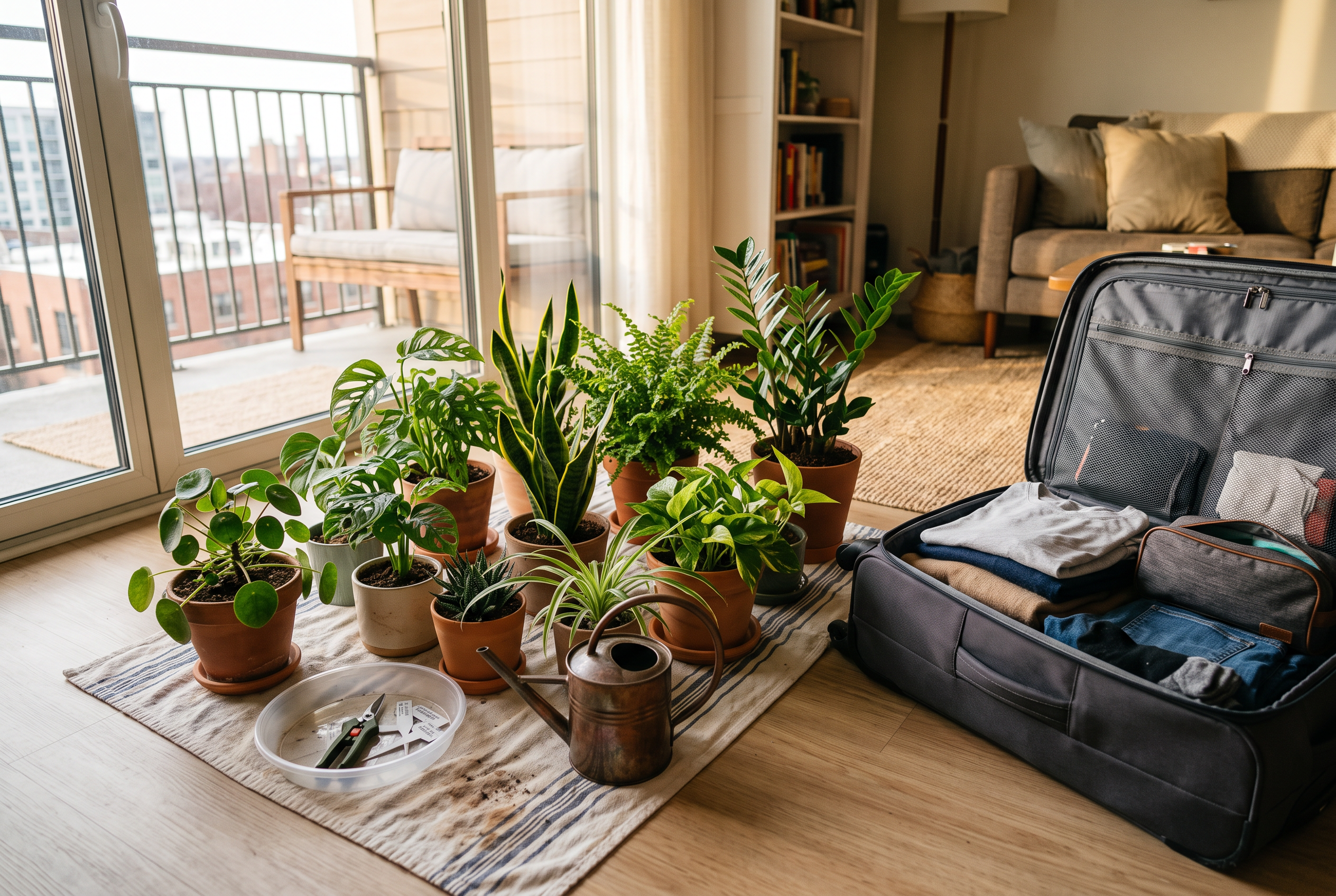
It is 11 p.m. the night before your flight. Your bag is half packed. You are carrying a watering can around the apartment, soaking twelve pots in twelve different sizes, hoping that one big drink will hold for a week.
Most people have done some version of this. And a lot of them come home to a dropped leaf pile, a mushy stem, or a fern that crisped in a sunny window.
Here is the thing. That last-minute soak is rarely what decides the outcome. The real decisions happen days earlier. Does each pot actually drain? Will a saucer full of standing water sit against roots for a week? Is the watering method you picked a good match for your pot material, your plant count, and the length of your trip? Have you ever seen it run before, or are you trusting it for the first time while you are 500 miles away?
This guide is a timeline, not a product list. It walks you through what to do two to three weeks out, one week out, and on departure day. You will inventory your plants and pots, check drainage and saucers, test your chosen method at home, size your water supply to your plants, and do a final walkthrough before you lock the door.
Some steps need a week or more of lead time. So start reading before you book, not the night before you leave.
- Start three weeks out: repotting and lining up a sitter cannot be rushed into departure week.
- Check drainage holes and empty saucers before choosing any watering device, since too much water kills more travel plants than too little.
- Run a dry run a week ahead on the same pots and soil, checking at 24 hours, 48 hours, and day five.
- Measure how much water each pot normally takes and multiply by your trip's watering cycles to size reservoirs.
- For trips past about two weeks, pair any passive setup with one sitter check-in.
A last-minute soak the night before your flight is rarely what decides whether your plants survive. The real work happens two to three weeks earlier: inventorying pots, confirming drainage, testing your watering method at home, and sizing water to your actual plant count. This timeline walks you through each step, from the first list you write to the final departure-day walkthrough.

20 Pack Terracotta Plant Watering Spikes, Self-Watering Stakes for Wine Bottles, Porous Clay, Reusable (Red A)
Reusable porous clay stakes that thread onto a wine bottle, so your dry run should use the same bottle size you plan to leave behind. The 20-pack covers several pots.
Check Price on Amazon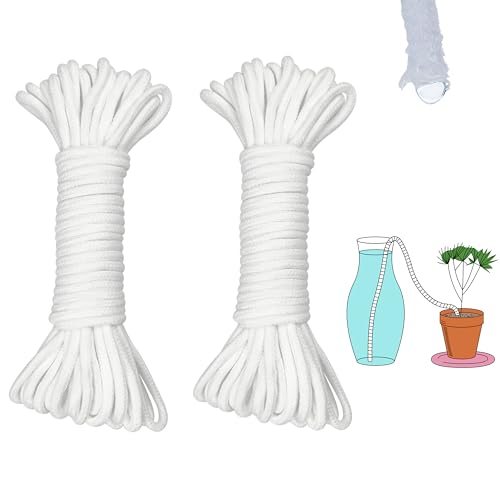
ORIMERC 60 feet 1/5 inch Self Watering Capillary Wick Cord Vacation Plant Sitter DIY Hydroponic Wicking Self-Watering Planter Pot Automatic Water System Device Potted Violet Auto Seedling Waterer Rope
A 60-foot length of capillary wick cord lets you cut one wick per pot and still reach a jug on the floor, which is easier to manage than six or eight tiny reservoirs.
Check Price on Amazon
Automatic Plant Waterer Indoor Self Watering System for 15 Potted Plants, Auto Drip Irrigation Kit Programmable Water Timer with Smart Humidity Detection, Green
A programmable timer system built to feed up to 15 potted plants from one reservoir; check the stated plant count against what you actually have, and run one cycle by hand before you leave.
Check Price on AmazonIn this guide
Two to Three Weeks Out: Inventory Your Plants, Pots, and Trip Length
Start with a list. Grab paper or open a notes app. Walk around your apartment and write one line per plant. This takes maybe 20 minutes, and it does more for your plants than any gadget.
For each plant, write down:
- The plant’s name, or a short description if you do not know it
- Pot size, roughly, in inches across the top
- Pot material: terracotta, plastic, glazed ceramic, or something else
- Whether the pot has a drainage hole
- How often you water it now, in days or weeks
- Whether it sulks when the soil dries out, or shrugs it off
That last column matters most. Many common houseplants get watered every one to two weeks. Some, like ferns, want to stay moist and show stress fast. Others are fine drying out between drinks. Your list will likely split into two groups: the plants that can wait, and the plants that cannot.
Now write your trip length at the top of the page. Count travel days on both ends. A five day trip and a twenty five day trip are different problems, and the same setup will not cover both.
Why pot material changes the answer
Terracotta is unglazed clay. It is porous, so water moves out through the walls as well as the surface. Pots like that tend to dry faster.
Plastic and glazed ceramic do not breathe the same way. Water mostly leaves through the soil surface and the drainage hole. Those pots usually stay damp longer.
So two identical plants in different pots can need very different care while you are gone. The small terracotta pot on a sunny sill is your biggest worry. The big plastic pot in a dim corner may need nothing at all. Note the pots that dry fastest. Those are the ones that need a real plan.
Make pot changes now, not while packing
If you decide a thirsty plant needs a different pot, do it now. Repotting stresses roots. They need time to settle into new soil before you walk out the door. Changing pots the night before travel stacks two stresses on top of each other.
The same goes for self watering planters. These pots hold water in a built in reservoir below the soil. They can reduce how often you water, but how long a fill lasts depends on your plant, your soil mix, your room temperature, and your light. You cannot know that from the box. You have to watch it for a couple of weeks.

If you try one, move the plant in two to three weeks early. Fill the reservoir, then check the soil every few days. Is it staying evenly damp, soggy, or drying out anyway? Soggy soil is a real risk with any passive system, especially for plants that like to dry between waterings. Better to learn that at home than from a photo your neighbor texts you.
Keep this list. The rest of the checklist builds on it.
Check Drainage and Saucers Before You Choose Anything Else
Before you pick a watering method, check that every pot can get rid of extra water. This step matters more than the gadget you choose. A passive watering system keeps adding water while you are gone. If that water has nowhere to go, the roots sit wet for days. Too much water is the most common way plants die on a trip, not too little.
Do the three-part drainage check
Go plant by plant. Lift each one and look.
- Is there a hole? Tip the pot and look at the bottom. You want at least one open drainage hole. If a root or a chunk of soil is plugging it, poke it clear with a pencil or a chopstick.
- Does water actually move through? Take the plant to the sink or tub. Pour water slowly on the surface. It should soak in and come out the bottom within a minute or two. If water pools on top and sits there, the soil may be packed tight or pulled away from the sides. If water runs straight out in seconds and the soil stays dry, the root ball may be shrunken and water is sliding down the gap. Both are worth fixing before you leave, not after.
- What is under the pot? A saucer that holds standing water for days keeps the bottom inch of soil soaked. Empty it after you water. Do not leave a full saucer as a backup water supply.
Easy apartment fixes
You do not need special tools for most of this.
- Empty every saucer after your pre-trip watering. Give it 30 minutes to finish draining, then dump it again.
- Lift the pot off the saucer floor. Pot feet work. So do a few flat stones, bottle caps, or a wine cork cut in half. The air gap keeps the drainage hole from sitting in a puddle.
- Use a deeper saucer only if you empty it. A big saucer is not a reservoir. It is a spill catcher.
- Pull the pot out of its cachepot. A cachepot is the decorative outer pot with no hole. Water collects in the bottom where you cannot see it. Either take the inner nursery pot out and set it on a saucer, or skip that plant in your passive plan.
What to do with no-hole containers
Some plants live in pretty ceramic pots with no hole at all. Do not try to run a passive system into those. There is no way to correct an overfill while you are away. You have three choices. Repot into a pot with a hole now, well before you leave, so the plant has time to settle. Water it carefully by hand right before you go and accept that it will dry down. Or hand that specific plant to a neighbor or sitter.
Write down which pots passed the check. That list is what your watering method has to cover. Anything that failed gets a fix or gets left out.
One Week Out: Run a Dry Run With Your Chosen Method
About a week before you leave, set up your watering method exactly the way it will run while you are gone. Same pots. Same soil. Same spot in the room. Same light. This is the only way to find out how your setup behaves in your apartment, not in a product photo.
Then check it three times: at 24 hours, at 48 hours, and again on day five.
What to look for at each check
24 hours. Look at the water level. Is the globe or bottle already empty? That means water is running out far faster than you need. Is the level exactly where you left it? That usually means nothing is flowing at all. Either way, you have a problem worth fixing now instead of from a hotel room.
48 hours. Press a finger into the top inch of soil. Soggy surface soil two days in is a warning sign. Passive systems can easily give a plant more water than it uses, and soil that never dries out raises the risk of root problems. Also check the saucer. Standing water in the saucer means the soil is already full.
Day five. Compare the remaining water to how many days your trip will last. If a device is half empty on day five, it will not carry you through a ten day trip. Better to learn that now.
Why your results may not match the package
Flow depends on things that change from home to home. Dense, peat heavy potting mix pulls water differently than a chunky, airy mix. A small pot fills up fast. A large pot takes much more. Warm, dry, bright rooms pull water out faster than cool, dim ones. Terracotta pots lose moisture through their walls. Plastic and glazed pots hold it in.
So treat any stated number of days as a starting point for your own test, not a promise about your plant.
Clay spikes work by letting water seep through porous material. In thick, compacted mix they can seep very slowly or stop. These reusable porous clay stakes thread onto a wine bottle, so your dry run should use the same bottle size you plan to leave behind.
20 Pack Terracotta Plant Watering Spikes, Self-Watering Stakes for Wine Bottles, Porous Clay, Reusable (Red A)
Check Price on AmazonGlobes and bulbs sit in the soil and release water as the soil dries. The opposite problem is common here: a wide opening in loose soil can drain in hours.


Smaller globes hold less water, so they suit small pots and shorter trips. Larger sets let you cover more plants at once.
If the dry run fails
Adjust and test again. Try a different pot, a deeper insert, or a firmer press of soil around a spike to slow fast drainage. If nothing holds for your trip length, that is useful information. Plan for a plant sitter instead, especially for big pots, thirsty plants, or a long trip.
Match Reservoir Size to Plant Count and Trip Length
A reservoir is just a container that holds water and releases it slowly. Before you pick one, do a little math. It takes five minutes and saves a lot of guessing.
Do the simple water math
Start with one plant. The next time you water it, measure how much water you pour in. Use a measuring cup. Write the number down.
Now count the watering cycles your trip will span. Many common houseplants get watered every one to two weeks, so a 10 day trip may cover one cycle for some plants and two for others. Check your own habits instead of assuming.
Multiply the water per pot by the number of cycles. That is your rough target for that plant. Do this for each pot, then add it all up. Compare that total to the capacity of the reservoir you plan to use.
The number is an estimate, not a promise. Warm rooms, dry air, bright windows, small pots, and fast draining soil all pull water out quicker. Terracotta pots dry faster than plastic or glazed ceramic. So treat your total as a floor, not a ceiling.
Bigger pots: buried inserts and capped spikes
For medium and large pots with room in the soil, a buried terracotta insert is a tidy option. Water seeps through the clay into the soil around it.

SmartiLiving Ollas (Set of 4) | 12oz Terracotta Plant Watering Globes - Self Watering Planter Insert - Automatic Plant Watering Devices | Vacation Watering Pots for Indoor & Outdoor Plants
Check Price on AmazonThese hold 12 ounces each. If your water math says a pot needs more than that over your trip, one insert will not be enough. You can add a second, or choose a different method.
Capped spikes work on the same idea and the lids help slow evaporation from the top.

A set of eight covers several pots. Just remember that each spike is its own small reservoir, with its own chance of clogging or running dry.
Many small pots: one shared jug
Once you pass roughly six or eight small pots, refilling and checking that many tiny reservoirs gets fussy. One larger water source is easier to manage.
Wick cord lets you run a thin rope from a jug or bucket into the soil of each pot. Water travels along the cord.
ORIMERC 60 feet 1/5 inch Self Watering Capillary Wick Cord Vacation Plant Sitter DIY Hydroponic Wicking Self-Watering Planter Pot Automatic Water System Device Potted Violet Auto Seedling Waterer Rope
Check Price on AmazonA 60 foot length gives you room to cut one wick per pot and still reach a jug on the floor. Put the jug on a tray in case it tips. Keep the jug below or level with the pot rims so water does not siphon in fast.
Know where passive methods stop
No passive system should be treated as unlimited. Reservoirs empty. Wicks dry out or shift. Soil can also stay too wet, which is its own risk.
For trips past about two weeks, or for a large collection, or for plants you would hate to lose, arrange one plant sitter check-in partway through. A single visit to top off water and look for problems is the cheapest insurance you can get.
Your Pre-Trip Timeline at a Glance
Here is the whole plan in one place. Each row shows what to do, when to do it, and how to tell the step is finished. The last column flags the steps that need real lead time. Those cannot be squeezed into the night before you fly.
Screenshot this table or print the page and tape it inside a cabinet door.
How to read the rush column
Three steps truly cannot be hurried. Repotting is one. Fresh soil and disturbed roots need weeks, not days, before a plant is left alone. Arranging a sitter is another, since it depends on another person’s schedule. The third is the dry run. A passive system can look fine for an hour and still run dry, leak, or clog by day three. You only learn that by watching it for a few days while you are home.
If your timeline is already short
You can still do a lot in two days. Skip repotting and leave it for after the trip. Water deeply, check that every pot drains, and group plants together away from hot windows. If you want a passive helper on short notice, pick something simple you can watch for a day or two, like wick cord run from a water jug or a few terracotta spikes. Simple setups have fewer parts to fail.
Adjust for trip length
For a long trip, work backward from your departure date and add a week of padding. Longer absences raise the stakes on every row above. They also raise the chance that one small problem, like a clogged emitter or a reservoir sized too small, becomes a dead plant. For trips past two weeks, pair your system with a person who can check in once. A sitter does not need plant skills. They just need to look, report, and top off a reservoir if you ask.
Departure Day: The Final Walkthrough
Do this in order. It takes about an hour for a medium collection.
1. Water thoroughly, then let pots drain
Many growers water the day before or the night before they leave. Water slowly until it runs out the drainage holes. Then let each pot sit in the sink or tub until dripping stops. This can take 15 to 30 minutes.
2. Empty every saucer
A pot standing in leftover water keeps the soil soaked. Roots in soggy soil for days can rot. Dump the saucers once draining is done, then set the pots back. The exception is a plant you know likes steady moisture, like a fern. Even then, keep standing water shallow.
3. Clean up the leaves
Pinch off dead or yellowing leaves and any open flowers you do not need. Fewer leaves means less water lost to the air. It also means less mess to find when you get back.
4. Group plants together
Move pots close together, away from the wall. Plants release moisture, so a cluster holds a little more humidity around itself. Keep the thirstiest plants in the middle.
5. Move pots off vents and glass
Air from a heating or cooling vent dries soil fast. So does hot or cold window glass. Slide pots a foot or two back from both. A plant touching a sunny pane in summer, or a cold one in winter, has the worst of it.
6. Set the blinds and the thermostat
You want soft ambient light, not harsh direct sun. Tilt the blinds partly closed, or pull a sheer curtain across. Skip blackout curtains and skip full darkness for a trip of several days or more.
Then check the thermostat. An empty apartment set warm in summer dries soil quicker. A cooler, steady setting slows water loss. Pick a setting you are comfortable paying for, and remember that warmer means your water has to stretch further.
Final checks for a pump or timer system
If you are using an automatic waterer, walk through the hardware last.
- Put in fresh batteries, or confirm the unit is plugged into an outlet that is not on a switch.
- Run one full cycle by hand and watch every emitter release water.
- Top the reservoir off to the fill line.
- Follow each tube with your fingers. Straighten kinks, press fittings tight, and look for drips.
- Set the pump and reservoir where a leak would land on tile or inside a tray, not on wood or carpet.
A programmable unit lets you lock in the cycle length you settled on during your dry run.

Automatic Plant Waterer Indoor Self Watering System for 15 Potted Plants, Auto Drip Irrigation Kit Programmable Water Timer with Smart Humidity Detection, Green
Check Price on AmazonSome kits are built to feed a larger group of pots from one reservoir, so check the stated plant count against what you actually have. Then take a photo of the finished setup. If a neighbor has to step in, that picture tells them what it should look like.
Frequently Asked Questions
How long can most houseplants go without water?
Most common indoor plants are watered about once every one to two weeks. That is a starting point, not a promise. A pothos in a plastic pot in a dim hallway holds moisture much longer than the same plant in a small terracotta pot by a sunny window. Pot material, pot size, soil mix, light, and indoor temperature all change the answer. If your trip is only a few days, many plants will be fine with a deep watering and nothing else. For longer trips, you need a passive method, a sitter, or both. See the inventory section for how to sort your plants by thirst level.
Should I water the day before I leave or the day I leave?
Many growers water the day before departure. That gives the pot time to drain fully, and it gives you time to spot a problem like a clogged drainage hole or a saucer that overflows. Departure day then stays simple. You do a final walkthrough, dump any standing water from saucers, and go.
What do I do about pots with no drainage hole?
Treat these as your highest risk pots. Without a hole, extra water has nowhere to go, and roots can sit wet for days. That is the most common way plants die while you are away, not thirst. You have three options. Repot into a container with a hole before your trip. Or use the no-hole pot as a decorative outer sleeve and slip a draining nursery pot inside it. Or water these plants lightly by hand before you leave and skip any passive system for them. Passive devices like globes and spikes keep feeding water in, which makes a no-drainage pot worse, not better.
Should I fertilize before I leave?
You can skip it. There is no need to feed right before a trip, and skipping it keeps one more variable out of your setup. Save it for when you are home and watching your plants again.
How do I brief a neighbor who knows nothing about plants?
Make it hard to get wrong. Group the plants that need water in one spot, and leave the rest alone. Label each pot with masking tape and a number, then leave a short written list that says how much water each number gets, measured in cups. Show your neighbor where the watering can, the sink, and the trash are. Tell them what to skip entirely. Add one line that matters most: if a pot feels wet, do not water it. Leave your phone number and a photo of how things looked when you left.
When is a sitter better than a passive system?
When the trip runs long, the collection is large, or the plants are hard to replace. A passive setup handles steady, modest needs. A person can notice a leak, a dry pot, or a dropped leaf. For long trips, using both is reasonable.
The Printable Pre-Trip Plant Checklist
Here is the whole guide in one place. Copy these lines into a notes app, or print this page and check them off by hand. Work top to bottom.
Two to Three Weeks Out
- Count your plants. Write down each one by name or by room.
- Note the pot material for each: plastic, glazed ceramic, or unglazed terracotta.
- Note which plants dry out fast and which stay moist for a week or more.
- Write down your trip length in days, including travel days.
- Decide which plants can simply wait and which need help.
- If you have many plants, large plants, or a long trip, line up a plant sitter now.
Drainage and Saucer Checks
- Confirm every pot has a drainage hole. Flag any that do not.
- Clear clogged holes with a skewer or chopstick.
- Empty and wipe out all saucers so standing water is not sitting there when you leave.
- Move pots without drainage into a cachepot setup, or plan to water those by hand before you go and leave them alone.
- Check that saucers are big enough to hold a little runoff without spilling onto floors.
One Week Out
- Set up your chosen watering method while you are still home.
- Run it for several days and watch what happens.
- Check soil moisture daily during the dry run. Look for soggy soil, not just dry soil.
- Look for leaks at every joint, cap, spike, or tube connection.
- Replace batteries in any timer or pump before you leave.
- Refill or reset the system after the dry run.
Leak Risk Points to Inspect
- Tube ends and connectors, which can pop loose.
- Spike or stake seals where they meet a bottle neck.
- Cracks in clay spikes and globes.
- The reservoir itself, especially if it sits on wood or carpet.
- Any emitter that drips too fast or not at all.
- Put a towel or tray under the whole setup as a backup.
Light and Temperature
- Move plants back from hot, bright windows so they dry out slower.
- Group plants together to share humidity.
- Set the thermostat so the apartment does not get very hot or very cold.
- Close curtains on windows that cook or chill a room.
Departure Day
- Water everything thoroughly and let it drain.
- Remove dead or yellowing leaves.
- Top off every reservoir.
- Confirm each tube, wick, or spike is still in the soil and still in the water.
- Empty saucers one last time.
- Take photos of each plant so you can compare when you return.
Sitter and Access Notes
- Sitter name and phone number written down.
- Door code, key location, and parking or buzzer instructions.
- Short watering notes per plant, in plain language.
- Your contact number and your return date.
Your Next Step Before You Book
If you do only one thing this week, do this: write your plant inventory.
Grab a notebook or a notes app. Walk your apartment. For each plant, write down four things. The plant name, the pot material, whether the pot has a drainage hole, and how often you normally water it. That is it. Most indoor plants get watered every one to two weeks, so your own habit is the best clue you have.
This list is the base for every other decision. It tells you how many plants you need to cover. It tells you which ones dry out fast. It tells you which pots cannot drain and will hold extra water at the bottom.
Then start the dry run seven days out
Pick your method and set it up at least a week before you leave. That means a real setup on real plants, not a test in the sink.
A week gives you time to see problems while you can still fix them. Wicks that do not pull water. Spikes that drain in a day. A reservoir that runs dry early. A hose joint that drips onto the floor. A battery powered timer you forgot to check. None of these are rare, and all of them are easier to catch at home than to guess about from a hotel room.
If the dry run goes badly, you still have options. You can move a thirsty plant to a shadier spot. You can switch methods. You can ask a neighbor or friend to stop by once. For a large collection, or for plants you would hate to lose, a person checking in is still the most reliable backup. No passive system can respond to a heat wave or a clog while you are gone.
Reuse the checklist and keep notes
The good news is that you only build this once. The next trip is mostly a repeat with small changes. A longer trip may need a bigger reservoir or fewer plants on one system. A winter trip changes the light and temperature picture. A new plant gets added to the list.
So when you get home, take five minutes before you unpack. Walk the same route you walked on departure day. Touch the soil in each pot. Write one word next to each plant on your list: dry, fine, or soggy.
That single note is the most useful thing you will ever have for planning the next trip. Dry means more water or a shadier spot next time. Soggy means too much water, poor drainage, or a saucer that should have been emptied. Fine means you can repeat exactly what you did.
You can print this page and keep it with your list. Start the inventory tonight, book your trip, and set your dry run date seven days before you go.
Sources and Further Reading
- How do you prep your plants for vacation? : r/plantclinic
- How To Prep Your Plants Before Vacation
- How to Take Care of Your Plants While on Vacation
- How to prepare and care for plants when away for 25 days?
- How to Care for Your Plants When You Leave for Vacation
- How to take care of my indoor plants while being out for …
- Prepare garden before vacation
- Going on vacation, any plant prep advice? : r/houseplants
- How to Care for Plants While on Vacation (Easy Guide)
- Get plants ready for your vacation
- Prepare your plants for vacation
- How to Care for Your Plants While You’re on Vacation


